
How long do electric scooter batteries last? The answer depends on whether you mean riding distance or replacement time. Here is a quick guide to battery life:
- Range per charge: Many everyday scooters travel approximately 15–50 km before recharging, although larger models can exceed this range.
- Overall lifespan: Mainstream lithium-ion scooter batteries commonly last around 2–5 years. Suitable LiFePO4 batteries can provide longer service under proper operating conditions.
These are broad estimates, not guarantees. Battery chemistry, capacity, charging habits, rider weight, terrain, weather, storage, and scooter quality all influence performance. Read on for more about expected lifespan, daily range, maintenance, and battery selection.
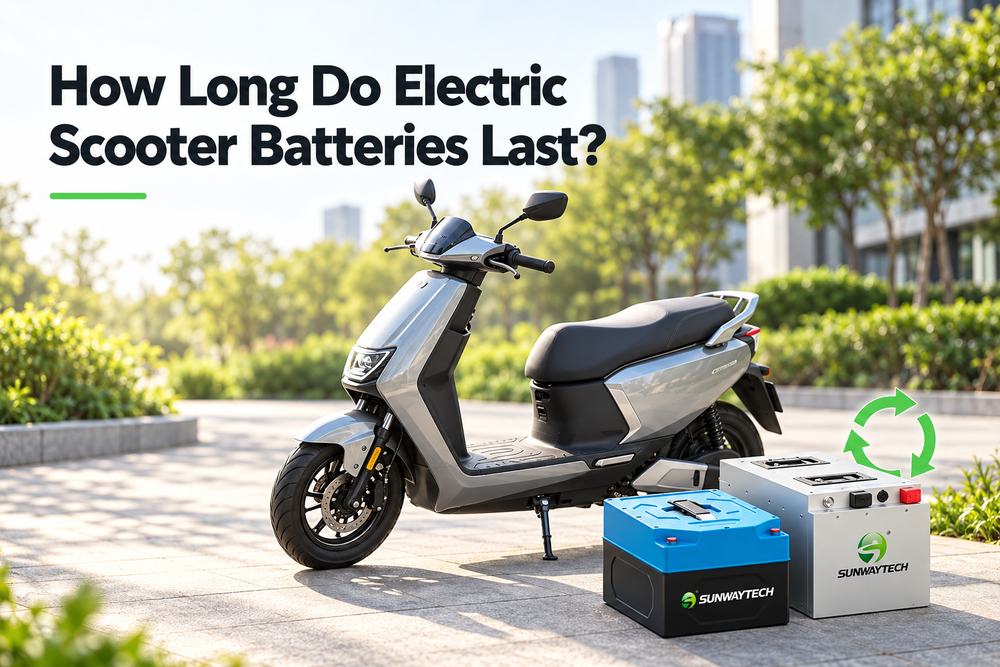
How Long Do Electric Scooter Batteries Last?
Battery chemistry is a useful starting point when comparing durability. A battery’s cycle life refers to how many charge-discharge cycles it can complete before reaching a specified capacity threshold, commonly 80% of its original capacity. Reaching that threshold does not mean the battery immediately stops working.
Average Lifespan by Battery Type
Battery type | Typical cycle life | Estimated service life | Common applications |
Lead-acid | 300–500 cycles | 1–3 years | Older scooters, budget electric two-wheelers, small electric vehicles |
Lithium-ion (NMC) | 800–1,500 cycles | 2–5 years | Lightweight commuter scooters and performance models |
2,000–3,000+ cycles | 5–10 years | Daily commuting, commercial mobility, frequently used electric vehicles |
Note: These are general estimates, not guaranteed lifespans. Actual cycle life depends on depth of discharge, temperature, battery construction, and testing conditions.
Why Consider LiFePO₄ Electric Scooter Batteries?
A LiFePO₄ electric scooter battery offers a practical balance of long cycle life, thermal stability, and operating cost.
Compared with lead-acid batteries, LiFePO₄ batteries generally provide longer service life and lower weight for comparable usable energy. Compared with NMC batteries, they typically offer greater thermal stability and cycle endurance, although NMC has an advantage in energy density.
This makes LiFePO₄ particularly attractive for frequently used vehicles, where battery replacement costs and operational reliability matter.
Sunway LiFePO₄ Battery Specifications and Features
At Sunway, our mobility battery portfolio includes light-vehicle, commercial, heavy-duty, and industrial configurations.
Sunway battery series | Voltage | Nominal energy | Max. discharge current | Heated LFP and low-temperature features | Main applications |
60V / 72V | 1,344–3,225.6 Wh | 65A | Heated options; selected models permit charging down to -10°C and discharging down to -30°C | E-scooters, e-bikes, small tricycles | |
60V / 72V | 3,584–5,529.6 Wh | 100A | Heated options; discharge temperatures down to -30°C | Delivery vehicles, passenger and cargo tricycles | |
60V / 72V | 6,400–15,052 Wh | 200A | Heated options; selected models permit charging down to -20°C and discharging down to -30°C | Heavy-duty mobility, cargo transport | |
24V / 48V | 1,843.2–14,336 Wh | 150A | Heated options; selected models permit charging down to -10°C and discharging down to -20°C | Forklifts, AGVs, industrial electric vehicles |
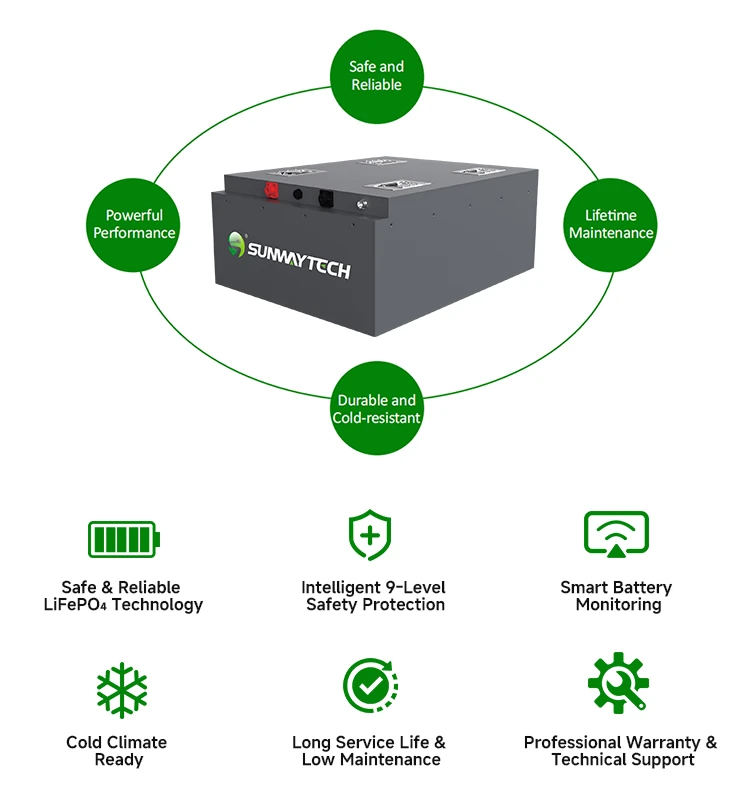
Across Sunway lithium mobility battery series, we integrate an intelligent battery management system (BMS) with up to nine levels of safety protection. These include protection against overcharging, over-discharging, overcurrent, short circuits, and abnormal temperatures.
Bluetooth connectivity enables real-time battery status monitoring, while selected models feature built-in heating to accommodate charging in low-temperature environments. These features help maintain battery safety, simplify maintenance, and meet the demands of different electric mobility applications.
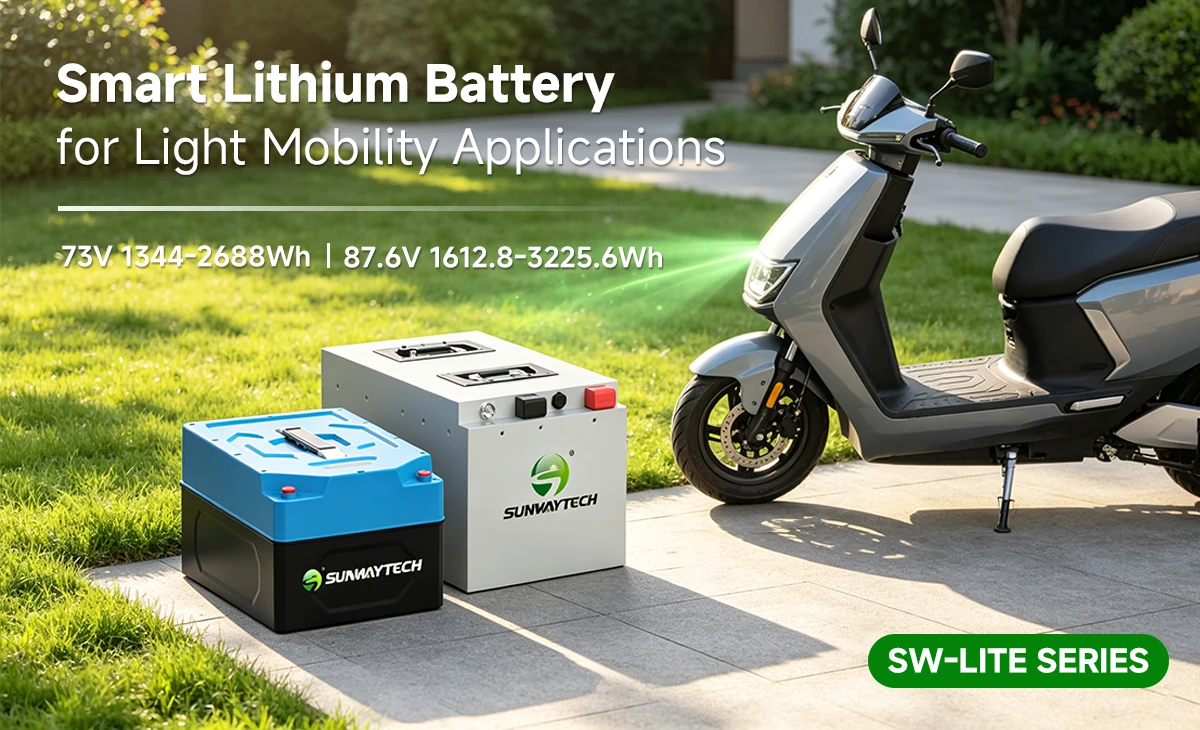
Picture shown: SUNWAY LITE SERIES Smart Lithium Battery for Light Mobility Applications
How Long Does an Electric Scooter Battery Last Per Charge?
Single-charge range depends primarily on usable battery energy and how efficiently the scooter consumes it. Entry-level scooters typically have smaller battery packs, while commuter and performance scooters use larger capacities to accommodate longer journeys.
As a broad planning reference, many everyday scooters cover approximately 15–50 km per charge, with premium models potentially exceeding that range.
Battery capacity helps explain the difference, but it does not determine range alone. According to market specifications, for example, compact scooters with approximately 275 Wh lithium-ion batteries may offer a claimed range of up to 40 km in Eco mode, while those with approximately 597 Wh batteries may reach up to 80 km in the same mode.
Advertised figures commonly reflect favorable conditions: a relatively light rider, flat pavement, moderate speed, mild temperatures, and few interruptions. Actual distances may be shorter.
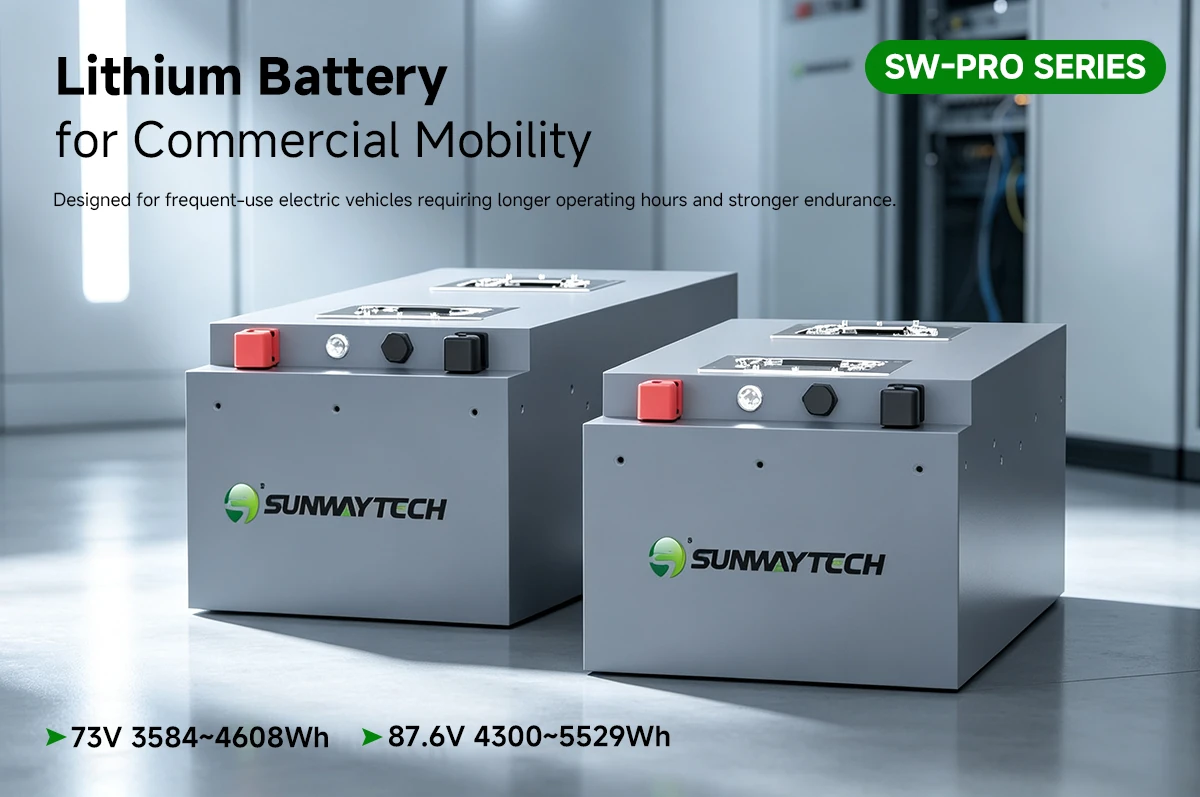
Picture shown: SUNWAY PRO SERIES Lithium Battery Solution for Commercial Mobility, offering 3,584–5,529.6 Wh capacities
What Reduces Electric Scooter Range?
Several everyday conditions can shorten the distance available from one charge.
- Rider weight: Carrying a heavier rider or additional cargo increases the energy required for acceleration and climbing.
- Speed: Riding continuously at high speed increases aerodynamic resistance and battery consumption.
- Hills and terrain: Steep gradients, rough pavement, and frequent stop-and-go riding demand more power.
- Tire pressure: Underinflated pneumatic tires increase rolling resistance, requiring the motor to work harder.
- Weather: Cold temperatures temporarily decrease the available power and energy of lithium batteries.
- Riding mode: Sport modes generally prioritize acceleration and performance, while Eco modes limit power consumption.
- Battery age: As battery capacity gradually declines, a full charge delivers less energy than when the battery was new.
For a realistic estimate, riders should consider their regular route, cruising speed, payload, and seasonal conditions rather than relying exclusively on advertised range.
What Affects the Overall Lifespan of an Electric Scooter Battery?
The overall lifespan of an electric scooter battery depends on how its cells age under different operating and environmental conditions.
1. Charging Habits
Frequent deep discharges place greater stress on battery cells, accelerating capacity loss. Keeping a battery fully charged for extended periods also promotes chemical degradation, while excessive charging currents can generate additional heat. These conditions gradually reduce the number of useful charging cycles.
2. Heat and Cold Exposure
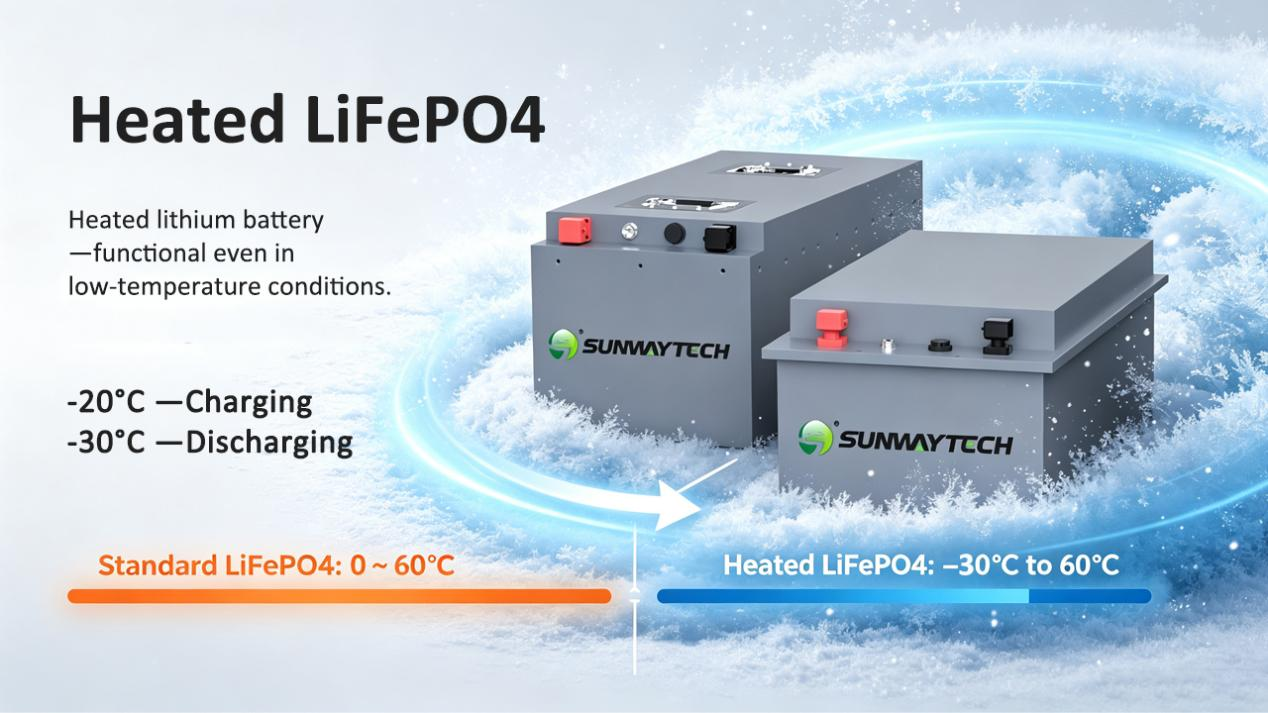
High temperatures accelerate internal chemical reactions, causing permanent capacity loss. Cold temperatures temporarily limit available energy, while charging below the permitted temperature range can cause irreversible damage. Sunway offers heated LiFePO₄ battery options that warm battery cells to accommodate charging in low-temperature environments.
3. Storage Conditions
Batteries continue aging even when unused. Prolonged storage at high temperatures or high charge levels accelerates capacity degradation. Meanwhile, self-discharge and standby power consumption can gradually drain a depleted pack, potentially causing damaging over-discharge during extended storage.
4. Battery and Scooter Quality
Cell consistency, manufacturing quality, and BMS design influence battery durability. Poorly matched cells can age unevenly, limiting usable capacity. Inefficient motors or unsuitable electrical systems may also increase current demand and heat generation, placing additional stress on the battery.
For Riders: How to Make an Electric Scooter Battery Last Longer
Protecting e-scooter battery life starts with consistent habits:
- Avoid frequent complete discharges. Recharge before the battery becomes critically low rather than regularly running it to empty.
- Use the recommended charger. Confirm that the charging voltage, current, and connector meet the manufacturer’s specifications.
- Avoid extreme temperatures. Charge in a suitable environment and allow a cold or overheated battery to return to its approved charging temperature. Also, store the scooter somewhere cool and dry.
- Store at a moderate charge level. For extended storage, follow the manufacturer’s recommended state of charge and check the battery periodically.
- Maintain proper tire pressure. Lower rolling resistance helps minimize unnecessary energy consumption.
- Ride smoothly. Moderate acceleration and sensible cruising speeds can conserve battery energy.
- Inspect the battery regularly. Watch for physical damage, unusual heat, swelling, water intrusion, or sudden changes in battery performance.
If a battery becomes damaged, swollen, or abnormally hot, discontinue use and arrange a professional inspection.
For Fleet and Business Buyers: How to Choose Long-Lasting Electric Scooter Batteries
Commercial buyers should evaluate dependable operation and lifetime cost—not just purchase price. Key procurement considerations include:
1. Verify Electrical Compatibility
Check nominal voltage, usable capacity, maximum discharge current, peak power requirements, and charger compatibility. Battery dimensions and mounting arrangements must also match the vehicle.
2. Compare Cycle Life Under Consistent Test Conditions
Ask suppliers for cycle-life test results, including depth of discharge, operating temperature, and remaining capacity at the end of testing.
3. Evaluate BMS Capabilities
Look for protection against overcharge, over-discharge, short circuits, overcurrent, and abnormal temperatures. Battery monitoring and diagnostic functions are particularly valuable for fleet maintenance.
4. Examine Applicable Safety Certifications
Request verifiable certification documentation for the intended market. For example, UL Solutions identifies UL 2271 for light electric vehicle batteries and UL 2272 for personal e-mobility electrical systems.
5. Calculate Total Ownership Costs
Consider expected service life, charging requirements, maintenance, warranty coverage, downtime, and replacement expenses alongside the initial battery price.
6. Evaluate the Supplier and Test Samples
Review quality controls, technical documentation, delivery capabilities, warranty terms, and after-sales assistance. Test sample batteries under realistic operating conditions before large-volume procurement.
Why Choose Sunway for Electric Mobility Batteries?
At Sunway, we offer a comprehensive portfolio of LiFePO₄ batteries for light mobility, commercial transportation, and industrial electric vehicles.
Our lithium mobility batteries address several important operating requirements:
- Intelligent battery protection: An advanced BMS with up to nine levels of safety protection, including overcharge, over-discharge, overcurrent, short-circuit, and temperature protection.
- Smart battery monitoring: Bluetooth connectivity provides real-time battery status information for easier monitoring and maintenance.
- Cold-weather configurations: Optional battery heating functions accommodate applications requiring charging in low-temperature environments.
- Flexible product selection: Multiple voltage, capacity, and mechanical configurations for different vehicle platforms.
- Technical and after-sales service: Professional assistance during product selection, integration, and ongoing operation.
Whether you are sourcing electric scooter batteries for daily transportation or planning a larger commercial fleet, our team can assist in evaluating suitable battery configurations and offer professional battery OEM&ODM service. You can contact us for more here!
Conclusion
So, how long do electric scooter batteries last? Depending on battery chemistry, operating conditions, and maintenance, they may remain usable from 2 to 5+ years. LiFePO₄ batteries are particularly worth considering for applications that prioritize cycle life and long-term operating costs.
At Sunway, we provide LiFePO₄ battery solutions for personal, commercial, and industrial mobility. Explore our electric mobility battery portfolio or contact Sunway to discuss your vehicle requirements and find a suitable battery solution.
FAQs about Electric Scooter Batteries
Q1: Can an electric scooter battery last 5 years?
Yes. An electric scooter battery can last five years or longer, particularly when it uses LiFePO₄ chemistry and is operated and stored within the manufacturer’s recommended limits. Actual lifespan depends on charging habits, temperature, depth of discharge, battery quality, and usage frequency.
Q2: How do I know if my electric scooter battery is dying?
Common signs include noticeably shorter riding range after a full charge, faster-than-usual battery drain, inconsistent charging, sudden power loss, or battery warnings. These symptoms can also indicate charger or electrical issues, so have the battery and scooter checked. Stop using a swollen or unusually hot battery.
Q3: What voltage is best for electric scooters?
There is no single best voltage for every electric scooter. Lightweight commuter kick scooters typically run on 36V or 48V systems. Larger seated e-scooters, e-mopeds, and commercial delivery vehicles perform better on 60V or 72V platforms for higher efficiency, higher speed, and longer range.
Q4: Does cold weather damage electric scooter batteries?
Cold weather can temporarily reduce a lithium battery’s available energy, power, and riding range. Charging below the battery’s permitted temperature range can cause permanent damage, so follow the manufacturer’s temperature limits.
Generally, charging below 0°C (32°F) can cause permanent cell damage from lithium plating. Heated LFP batteries, such as Sunway SW-Lite and SW-Pro series, allow safe low-temperature operation, ensuring safe charging down to -20°C.
Q5: What are the best batteries for electric scooters?
The best battery depends on your scooter’s voltage, energy requirements, discharge current, and operating conditions. Sunway’s electric scooter battery series offers 24V, 48V, 60V and 72V configurations for e-scooters and other light-mobility vehicles, with BMS protection and Bluetooth monitoring. Feel free to contact Sunway to discuss a suitable battery configuration and explore OEM/ODM solutions for your application.