
Battery energy storage systems (BESS) are becoming an important part of commercial facilities, renewable energy projects, microgrids, and utility infrastructure. As deployment grows, however, BESS safety becomes a central consideration for developers, EPC contractors, system integrators, and asset owners.
Key risks include thermal runaway, fire propagation between cells or cabinets, electrical faults, and combustible or toxic gas release. Thermal runaway, for example, can cause lithium-ion cells to overheat and release flammable gases, potentially resulting in ignition or fire propagation.
This is why battery storage regulations, testing standards, installation codes, and third-party certifications play different but complementary roles. Understanding them helps buyers determine whether a BESS has been appropriately designed, tested, installed, and documented for its intended market.
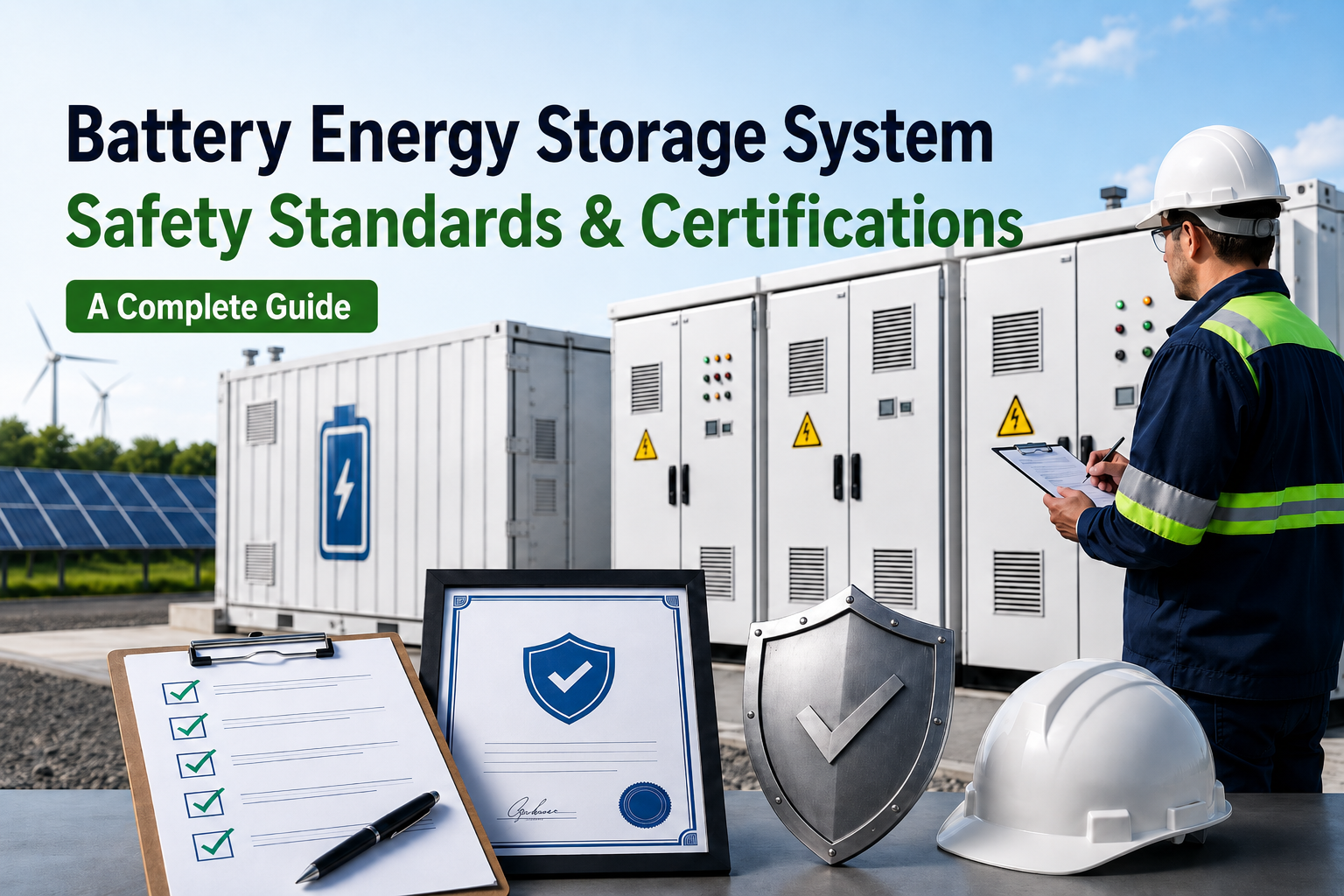
What Are Battery Energy Storage Safety Standards?
Battery energy storage safety standards establish technical requirements and test methods for reducing electrical, mechanical, thermal, fire, and other hazards throughout the BESS lifecycle.
They can generally be divided into three levels.
1. Product-Level Standards
Product or component standards focus on individual elements such as battery cells, modules, battery packs, inverters, and related equipment.
For example, UL 1973 addresses batteries used in stationary applications, while IEC 62619 establishes safety requirements and tests for secondary lithium cells and batteries used in industrial applications, including stationary electrical energy storage systems.
2. System-Level Standards
System standards look beyond individual batteries and evaluate how different components work together.
A complete BESS may combine batteries, a battery management system (BMS), a power conversion system (PCS), an energy management system (EMS), electrical protection, thermal management, controls, communications, and fire protection equipment.
System-level testing is therefore important because certified individual components do not automatically mean that the integrated BESS meets all applicable system requirements.
3. Installation and Fire Codes
The third layer concerns how a system is installed and operated at a particular site.
Requirements may address cabinet spacing, fire detection, fire suppression, ventilation, electrical disconnects, emergency access, commissioning, maintenance, and emergency response planning.
Consequently, battery energy storage system certification should always be considered together with local building, electrical, and fire regulations.
What Are the Main BESS Certification and Safety Standards?
There is no single universal BESS certification covering every country and project. Instead, different standards address specific safety layers and jurisdictions.
1. UL 9540: System-Level Certification
UL 9540, the standard for energy storage systems and equipment, is one of the most important system-level safety standards for energy storage, particularly in North America.
It evaluates the complete ESS and covers areas including charging and discharging, protection, control, communication between devices, enclosures, and interaction between system components. UL 9540 also references other relevant standards, including UL 1973 for batteries and UL 1741 for power conversion equipment.
For buyers, this distinction matters: UL 9540 evaluates an integrated energy storage system rather than only its battery cells or modules.
2. UL 9540A: Thermal Runaway Fire Propagation Testing
UL 9540A is often confused with UL 9540, but the two serve different purposes.
UL 9540A is the standard for test method for evaluating thermal runaway fire propagation in battery energy storage systems. It evaluates how a BESS behaves when thermal runaway occurs and provides data relevant to fire propagation, gas release, enclosure design, separation distances, and fire protection strategies.
It is a test method, not a standalone product certification. Additionally, UL 9540A is referenced by NFPA 855 and fire codes for large-scale fire testing.
When reviewing a UL 9540A report, developers should also check what level was tested, because testing can address cells, modules, units, and installation-level configurations.
3. UL 1973: Battery Safety at the Component Level
UL 1973 applies to rechargeable batteries used in stationary, vehicle auxiliary power, and light electric rail applications. As a rigorous safety benchmark, it evaluates battery systems through extensive electrical, mechanical, environmental, and electromagnetic immunity testing.
Key requirements include verifying the functional safety of the Battery Management System (BMS) and conducting tolerance testing for internal cell failures to ensure a single-cell thermal runaway does not propagate into fire or explosion.
4. NFPA 855 and Fire Code Requirements
NFPA 855 is the standard for the installation of stationary energy storage systems. The current 2026 edition covers areas including system interconnections, commissioning, operation and maintenance, decommissioning, and electrochemical energy storage systems.
In addition to the NFPA 855, there could be other fire code requirements. For instance, in the United States, fire-code requirements may also apply through the International Fire Code or locally adopted versions of it.
For example, Section 1207 of the 2024 IFC requires applicable ESS equipment to be listed according to UL 9540 and requires representative large-scale fire testing according to UL 9540A where specified. It also addresses energy storage management systems, disconnects, installation arrangements, maintenance, and emergency considerations.
However, the code edition actually enforced depends on the project jurisdiction and the authority having jurisdiction (AHJ).
5. IEC 62933 and IEC 62619
IEC standards are widely relevant to international BESS projects.
IEC 62619:2022 specifies safety requirements and tests for secondary lithium cells and batteries used in industrial applications, explicitly including stationary electrical energy storage systems.
At the system level, IEC 62933-5-1:2024 provides general safety considerations for grid-integrated electrical energy storage systems, including hazard identification, risk assessment, and risk mitigation.
IEC 62933-5-2:2025 goes further for electrochemical systems. It applies to the BESS lifecycle from design through end-of-service-life management and addresses risks created by interactions between electrochemical storage subsystems and the wider system.
6. Other Regional Battery Storage Regulations
Compliance requirements vary significantly by country.
- In the European Union, Regulation (EU) 2023/1542includes specific safety requirements for stationary battery energy storage systems. Article 12 requires these systems to be safe during normal operation and requires technical documentation demonstrating testing against relevant safety parameters.
- Australia has its own framework. The Clean Energy Councilnotes that SA TS 5398:2025 was introduced as a new safety specification for electrical energy storage equipment and is being phased into its approved battery requirements.
These examples demonstrate why a certification accepted in one market may not be sufficient for another.
What Should BESS Buyers and Developers Check?
When selecting a battery energy storage system, buyers and developers should evaluate both product safety and project-specific compliance before procurement.
1. Confirm the Necessary Certifications
Check whether the BESS has the certifications required for the target market and application. Make sure the certificates apply to the exact system model and configuration, rather than only to individual components such as batteries or inverters.
2. Review Installation and Safety Controls
Examine the manufacturer’s installation requirements and built-in safety features. Important areas include emergency shutdown functions, electrical protection, thermal management, fire protection, and battery management system (BMS) controls for monitoring temperature, voltage, current, and abnormal operating conditions.
3. Check Local Fire Codes and Project Jurisdiction
BESS certification requirements can vary between countries, regions, and individual projects. Developers should confirm that the proposed BESS aligns with applicable fire, electrical, and building codes, as well as requirements established by the local authority having jurisdiction (AHJ).
4. Verify Supporting Documentation
Request relevant certificates, third-party test reports, manufacturer declarations, datasheets, installation manuals, and compliance documents. Confirm that these documents match the system being supplied and provide sufficient information for permitting, inspection, and project approval.
Reviewing these four aspects early can help buyers identify compliance gaps before installation and reduce potential approval or project delays.
Best Practices for BESS Safety Compliance
BESS safety compliance should be considered throughout system design, installation, operation, and maintenance. The following practices can help project owners and operators manage safety more effectively.
1. Use Certified Components and Integrated Systems
Choose batteries, inverters, protection devices, and complete BESS configurations that meet applicable safety standards. Avoid replacing critical components without checking whether the change affects system compatibility or certification.
2. Design for Ventilation, Monitoring, and Temperature Control
Provide appropriate cooling, ventilation, gas management, and continuous monitoring. For example, temperature sensors and BMS alarms can help operators identify abnormal battery conditions before they develop into more serious problems.
3. Follow Codes and Manufacturer Instructions
Install the system according to applicable electrical, building, and fire codes, approved project drawings, and manufacturer requirements. Pay particular attention to equipment spacing, electrical connections, access, and fire protection.
4. Train Operators and Emergency Responders
Personnel should understand normal operation, alarms, emergency shutdown procedures, and potential hazards. Emergency responders should also be familiar with the site layout and system-specific response procedures.
5. Perform Regular Maintenance and Updates
Inspect batteries, cooling equipment, electrical connections, fire protection systems, and BMS alarms regularly. Apply manufacturer-approved firmware or software updates when required.
6. Maintain Complete Compliance Records
Keep certificates, test reports, commissioning records, inspection logs, maintenance records, manuals, and emergency plans available for permitting, insurance reviews, audits, and inspections.
How Does Sunway Support Safe and Compliant Battery Energy Storage Projects?
At Sunway, we develop lithium battery and integrated energy storage solutions for residential, commercial, industrial, and larger project applications, with emphasis on battery safety, thermal management, system integration, and project-specific configuration.
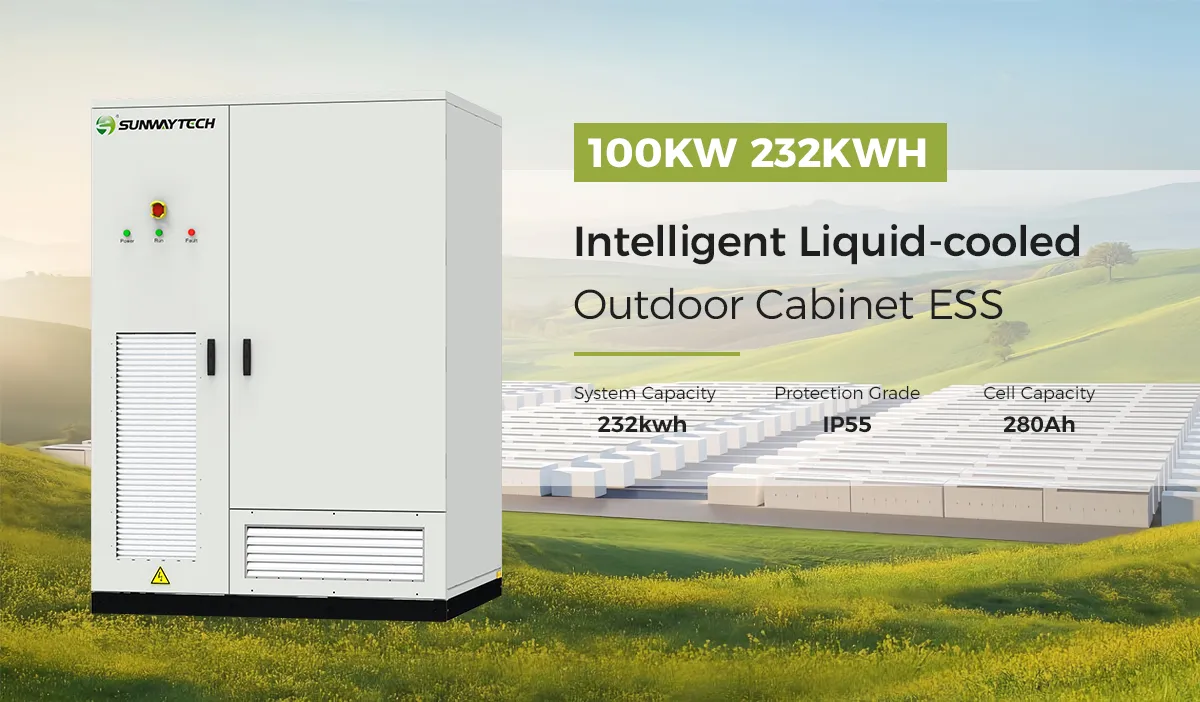
Our C&I BESS portfolio includes air-cooled and liquid-cooled outdoor systems ranging from cabinet-scale solutions to MWh-class containerized BESS. For example, our 100 kW/232 kWh liquid-cooled system integrates LFP batteries, modular PCS, EMS/BMS, power distribution, liquid cooling, and fire protection in an IP55 outdoor cabinet.
Our 1000 kW/2 MWh liquid-cooled ESS similarly integrates LFP batteries, PCS, intelligent monitoring, cooling, BMS, and fire suppression for commercial and industrial applications.
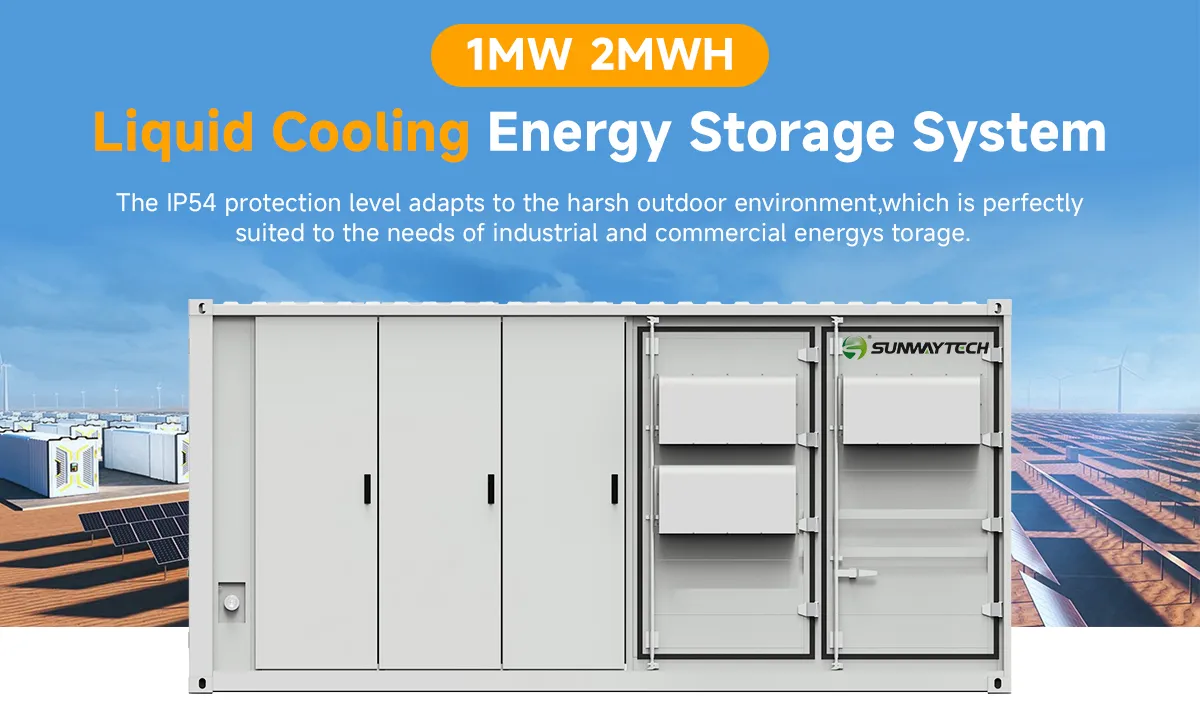
Furthermore, we support the certification and compliance needs of different markets. Depending on the model and configuration, Sunway products are available with certifications and compliance documentation including UL, TÜV, CE, ISO, and applicable IEC/EN standards. For example, our 1 MW-class containerized solution is supported by UL, TÜV, CE, and ISO certifications and complies with applicable IEC/EN standards, including IEC/EN 62109-1/-2 and IEC/EN 62477-1.
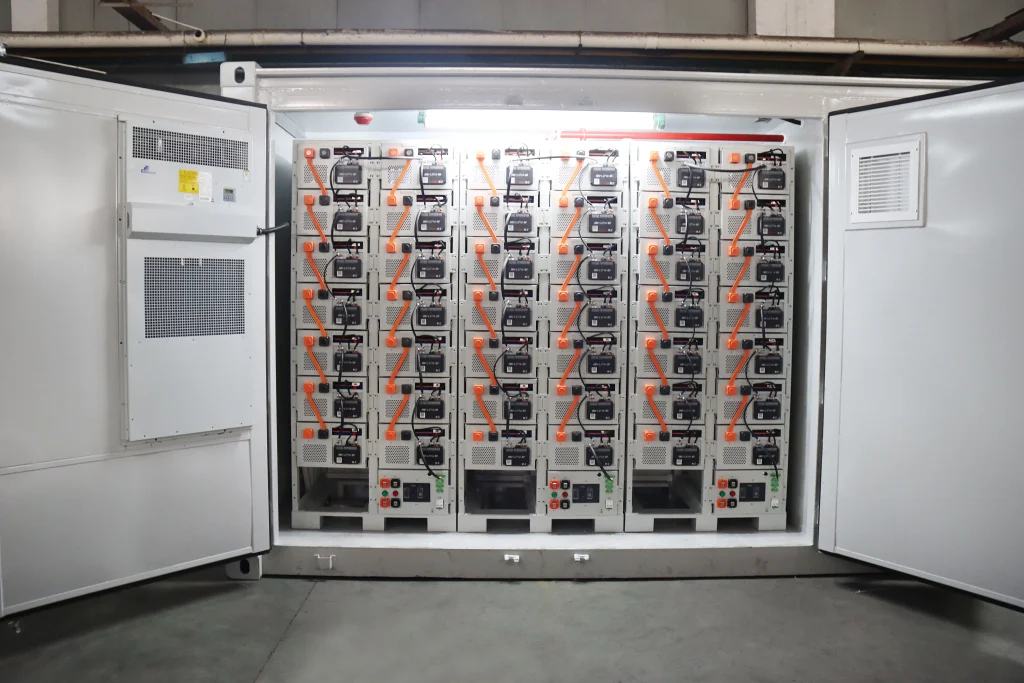
Our engineering experience is also supported by international deployment. In Latvia, we delivered a 1 MWh/500 kW energy storage system integrating battery storage, PV connection, AC power management, and an emergency shutdown function that can disconnect the system during faults. Our broader project experience also includes storage deployments in El Salvador, Ireland, and Peru, including MW- and MWh-scale applications that require different system configurations and project execution strategies.
Conclusion
Effective BESS safety requires more than selecting a battery with a certificate. It requires the right combination of product-level standards, system-level BESS certification, fire testing, local battery storage regulations, installation practices, monitoring, maintenance, and documentation.
For developers and buyers, understanding standards such as UL 9540, UL 9540A, UL 1973, NFPA 855, IEC 62619, and IEC 62933 makes it easier to compare systems and identify compliance requirements before procurement.
Sunway provides integrated lithium battery and energy storage solutions for different capacities, applications, and international markets. If you need help selecting a suitable system or discussing project-specific requirements, contact the Sunway team for technical consultation and a tailored energy storage solution!