
How long do LiFePO4 batteries last? Quality lithium iron phosphate (LiFePO4) batteries are commonly marketed with a service life of around 10–15 years, although actual longevity depends on battery quality, operating conditions, and usage patterns. For solar energy storage, backup power, and other applications, this estimate should be treated as a planning reference rather than a guarantee.
Years of service are only part of the picture. Cycle life, which measures how many charge-discharge cycles a battery can complete before reaching a specified capacity threshold, is another important measure of LiFePO4 battery life.
This guide covers LiFePO4 battery life expectancy in years and cycles, factors affecting battery degradation, ways to extend service life, and comparisons across different application scenarios.
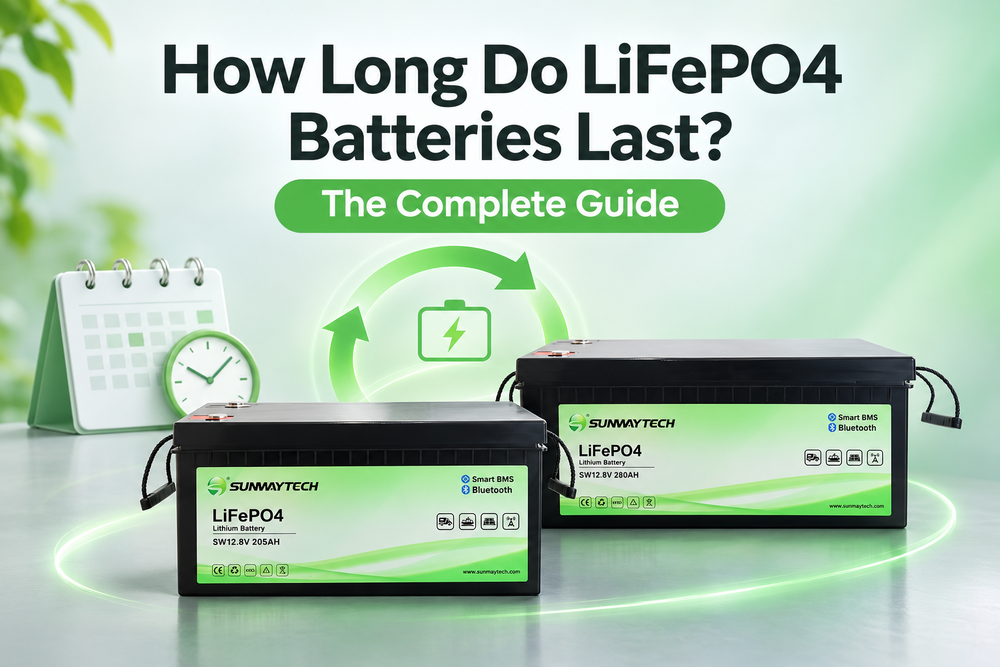
How Long Do LiFePO4 Batteries Last?
1. LiFePO4 Battery Lifespan in Years and Cycles
A LiFePO4 battery can provide approximately 10–15 years of service under suitable operating conditions, but its actual lifespan varies by model and application. Most LFP battery manufacturers specify cycle life ratings of 3,000–6,000 cycles or more, depending on the battery design and testing conditions.
2. LiFePO4 Battery Cycle Life vs. Calendar Life
To understand LiFePO4 battery life expectancy, it is important to distinguish cycle life from calendar life.
2-1 Cycle life refers to the number of charge-discharge cycles a battery can complete before its capacity falls to a specified end-of-life (EOL) threshold. Many manufacturers use 80% of the original capacity as a reference, although the actual threshold varies.
Example: Brand A LiFePO4 Battery Cycle Life at Different DoD Levels
- 2,500 cycles at 80% depth of discharge (DoD)
- 3,000 cycles at 70% depth of discharge (DoD)
- 5,000 cycles at 50% depth of discharge (DoD)
2-2 Calendar life refers to how long a battery can maintain usable performance over time, regardless of how frequently it is charged or discharged. Even when a battery is not in use, chemical aging continues due to processes such as solid electrolyte interphase (SEI) layer growth and electrolyte decomposition. These processes gradually affect the battery’s performance and usability.
LFP batteries generally have a calendar life of roughly 10–15 years at 25°C (77°F). Higher temperatures accelerate the aging process, which can shorten the battery’s calendar life.
For applications where LiFePO4 batteries may remain idle for extended periods, such as backup power systems, users should pay close attention to the battery’s calendar life when evaluating battery options.
3. LiFePO4 vs. Other Battery Types: A Lifespan Comparison
Comparison | LiFePO4 (LFP) | NMC Lithium-ion | Lead-Acid |
Typical Cycle Life | 3,000–6,000+ cycles | 1,500–4,000 cycles | 300–800 cycles |
Calendar Life | 10–15 years | 8–12 years | 3–5 years |
Energy Density | Moderate | High | Low |
Round-Trip Efficiency | 90–98% | 90–98% | 65–85% |
Maintenance | Low | Low | Depends on type |
| Long cycle life, good thermal stability, suitable for frequent cycling | High energy density, compact design, lighter weight | Lower initial cost, established technology |
Common Applications | Solar storage, off-grid systems, backup power | Electric vehicles, portable and compact energy storage | UPS, backup power, automotive applications |
Note: The values shown are indicative ranges. Actual values may vary depending on battery chemistry, cell design, depth of discharge (DoD), operating temperature, C-rate, and end-of-life (EOL) threshold.
Factors That Affect LiFePO4 Battery Lifespan
Several factors influence how quickly a LiFePO4 battery loses its capacity and performance.
1. Depth of Discharge (DoD)
Depth of discharge measures how much of a battery’s available capacity has been used. For example, an 80% DoD means that 80% of its capacity has been discharged, leaving approximately 20% remaining.
Repeated deep discharges generally place greater stress on battery cells than shallower cycling. Operating within a moderate DoD range can help extend cycle life, provided the available capacity still meets the application’s energy requirements.
2. Operating and Charging Temperature
Temperature affects both battery performance and the rate of chemical aging.
- High temperatures: Prolonged exposure to heat accelerates internal chemical reactions and can increase capacity degradation.
- Low temperatures: Battery performance may decline, and charging below the manufacturer’s specified minimum temperature can damage cells. For typical LiFePO4batteries, charging at temperatures below 0°C (32°F) can cause lithium plating, a process in which metallic lithium deposits on the anode surface. This can lead to significant capacity degradation over time.
- Stable temperatures: Operating within the recommended temperature range helps maintain consistent performance and reduce unnecessary stress. It should be noted that charging and discharging limits are not necessarily identical. For example, Sunway’s electric scooter LFP battery SW-Lite-6023 supports charging from 0°C to 55°C and discharging from −20°C to 55°C.
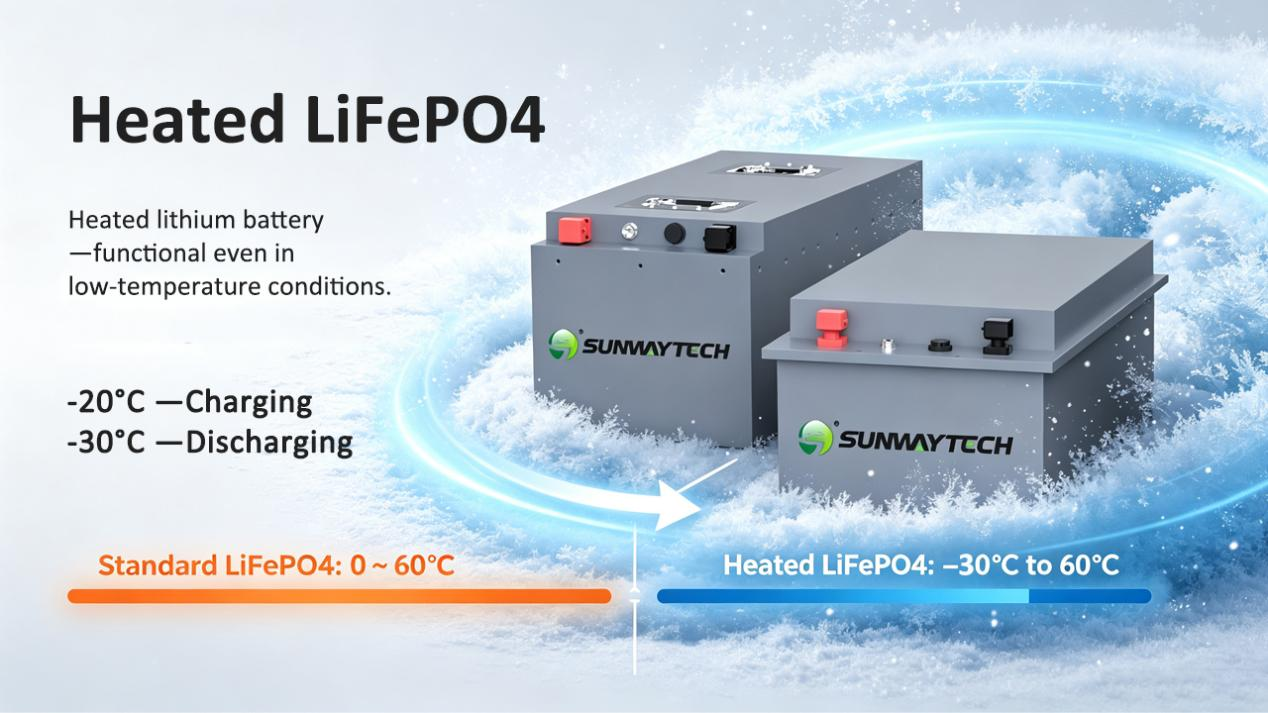
Sunway’s electric scooter LFP battery lineup includes heated options that support discharging at -30°C to 60°C and charging at -10°C to 60°C. Contact Sunway for more information.
3. Charging and Discharging Rates
The charging and discharging rate, expressed as the C-rate, indicates how quickly current flows into or out of a battery relative to its rated capacity.
For example, a 100Ah battery discharging at 1C supplies 100A, while a 0.5C discharge rate corresponds to 50A.
Consistently operating at high C-rates can generate additional heat and increase battery stress. A 2024 study in the International Journal of Sustainable Energy found that increasing the discharge rate from 0.5C to 0.8C reduced the predicted cycle life of the tested LFP cells by approximately 52.9% at 25°C. The result is specific to the tested cells and conditions, but demonstrates why operating within the recommended current range matters.
4. Cell Quality and Battery Management
The quality of individual cells influences the consistency and durability of the entire battery pack. Variations in cell capacity, internal resistance, and manufacturing quality can lead to uneven performance and premature degradation.
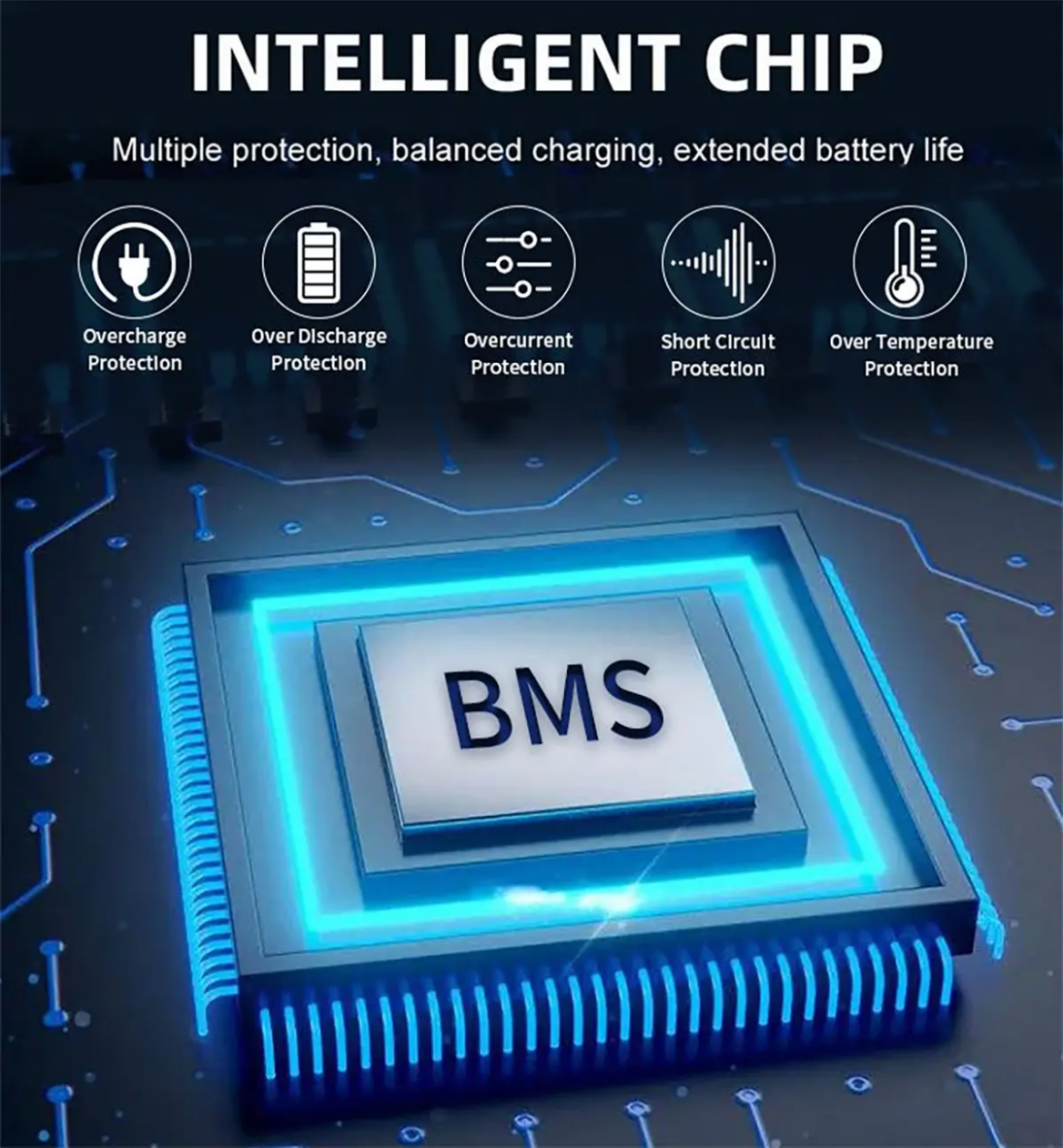
A battery management system (BMS) also plays an important role. It monitors operating conditions and helps protect cells against overcharging, excessive discharge, overcurrent, and temperature-related problems. However, it cannot compensate for poor wiring, unsuitable equipment, or repeated operation outside recommended settings.
When selecting a LiFePO4 battery, consider both cell quality and BMS functionality rather than evaluating cycle life alone.
5. Storage Conditions and Usage Patterns
Even when a battery is not actively supplying power, its internal components continue to age. Long-term storage in hot environments or at an unnecessarily high state of charge can accelerate capacity loss.
Usage frequency also matters. Batteries that undergo daily charging and discharging generally accumulate cycles faster than those used occasionally for emergency backup.
For long-term storage, follow the manufacturer’s recommendations for state of charge, temperature, and periodic inspection.
How Long Do LiFePO4 Batteries Last in Different Applications?
The actual LiFePO4 battery life varies considerably across applications because each system has different charging frequencies, discharge depths, and power requirements.
Application | Key Lifespan Considerations |
Residential Solar Storage | Daily charging and discharging can quickly accumulate charge cycles. |
Off-Grid Solar Systems | Frequent cycling, deeper discharges, and seasonal solar production affect battery aging. |
RV and Camper Batteries | Travel frequency, power consumption, and seasonal storage influence usage patterns. |
Marine Applications | Temperature, vibration, charging sources, and onboard electrical loads affect battery lifespan. |
UPS and Backup Power | Occasional discharging limits cycle accumulation, although calendar aging continues during standby. |
Industrial Equipment | High discharge currents, operating hours, and demanding load profiles affect battery durability. |
Frequently cycled batteries generally degrade faster than batteries used occasionally for resilience. This means that daily-cycled batteries typically require replacement sooner than occasionally used backup batteries.
Before purchasing, compare three factors:
- Cycle-life rating: Check the rated number of cycles and the corresponding DoD, temperature, and C-rate.
- Warranty terms: Review the coverage period, guaranteed capacity retention, and energy-throughput limits, if applicable.
- Operating conditions: Consider daily energy consumption, charging frequency, peak loads, and installation environment.
These details provide a more realistic basis for estimating service life.
How to Extend LiFePO4 Battery Life
Proper operation and maintenance can help preserve battery capacity and improve long-term reliability. Consider the following practical checklist:
- Avoid frequent deep discharges. Follow the recommended DoD instead of regularly draining the battery to its minimum voltage.
- Use a compatible charger. Match charging voltage and current settings to the battery manufacturer’s specifications.
- Control operating temperature. Install batteries in a suitable environment and avoid prolonged exposure to excessive heat.
- Follow recommended C-rates. Keep charging and discharging currents within the battery’s rated limits.
- Monitor battery health. Check SOC, voltage, temperature, and BMS alerts to identify abnormal operating conditions.
- Store batteries correctly. For extended periods of inactivity, follow the recommended storage SOC and temperature, and inspect the battery as instructed.
- Check system compatibility. Ensure that the inverter, charger, wiring, and connected loads are compatible with the battery specifications.
When Should You Replace a LiFePO4 Battery?
A LiFePO4 battery does not necessarily need replacement as soon as it reaches a certain age or cycle count. Instead, evaluate its remaining usable capacity and ability to meet the application’s power requirements.
Signs that a battery may need professional assessment include noticeably shorter backup times, reduced available capacity, repeated BMS warnings, or abnormal voltage behavior. A capacity threshold of 70–80% is commonly used as an end-of-life reference, but the actual replacement criterion depends on the product and warranty.
Before replacing the battery, check whether inverter settings, charging conditions, or connected equipment are contributing to the performance changes.
Go to Sunway for A-Level LiFePO4 Batteries for Different Applications
Long LFP battery life starts with choosing a product that fits the application. At Sunway, we provide solar and energy-storage solutions for residential, commercial, and utility applications, helping customers connect battery selection with broader system requirements.
Our range includes Grade A LiFePO4 storage options for projects requiring integrated energy storage. Product selection should match the required voltage, capacity, installation format, and operating conditions.
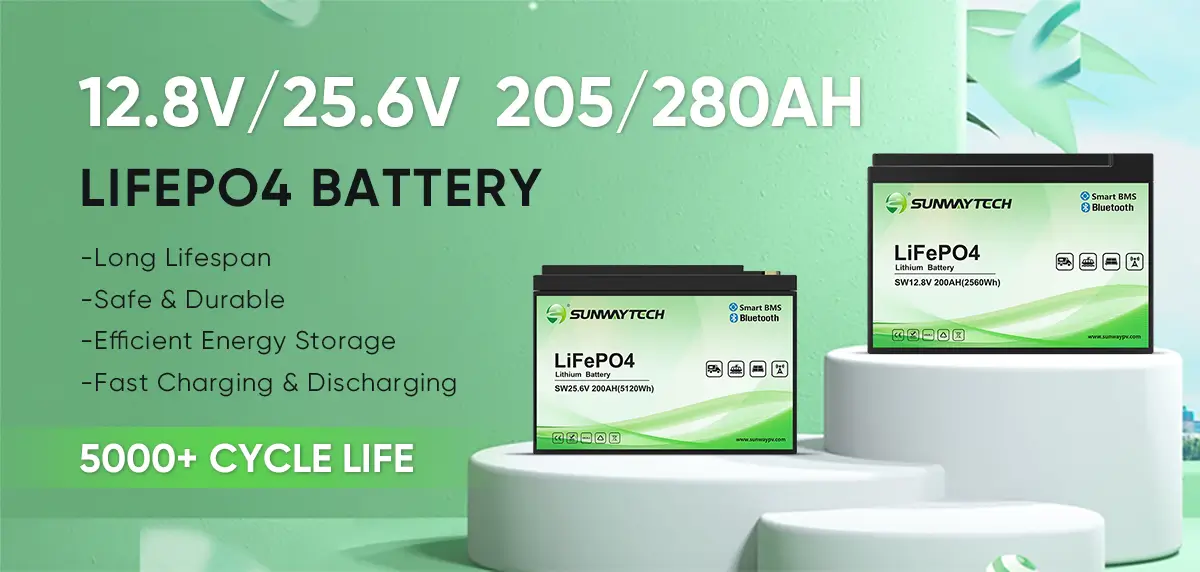
Sunway 12.8V and 25.6V LiFePO4 Storage Batteries
Specification | X12-205-075P1CV1 | X12-280-075P1CV1 | X24-205-075P1CV1 |
Battery chemistry | LFP | LFP | LFP |
Nominal voltage | 12.8V | 12.8V | 25.6V |
Nominal capacity | 205Ah | 280Ah | 205Ah |
Nominal energy | 2.62 kWh | 3.58 kWh | 5.25 kWh |
Max. charging current | 150A | 150A | 150A |
Max. discharging current | 200A | 200A | 200A |
Cycle life | ≥5,000 | ≥5,000 | ≥5,000 |
Dimensions (mm) | 384 × 194 × 274 | 384 × 194 × 274 | 523 × 269 × 225 |
Note: Cycle-life rating: 0.5C, 25°C. Nominal energy is calculated from voltage × capacity.
These batteries offer several practical features:
- Long cycle life: Rated for at least 5,000 cycles under the specified 0.5C and 25°C conditions.
- High-current output: Supports a maximum discharge current of 200A, making the range suitable for compatible UPS and industrial equipment.
- Flexible installation: Different voltage and capacity configurations accommodate varying energy storage requirements.
- Wide operating temperature range: Charging from 0°C to +55°C and discharging from -20°C to +55°C.
Integrated Solar Energy Storage Configurations
Sunway also provides integrated solar system configurations that combine photovoltaic panels, inverters, and LiFePO4 batteries.
For example:
- Set A: 1.65kW solar panels, 1.2kW inverter, and one 12.8V 205Ah battery.
- Set B: 1.65kW solar panels, 1.2kW inverter, and one 12.8V 280Ah battery.
- Set C: 3.85kW solar panels, 3.6kW inverter, and one 25.6V 205Ah battery.
- Set D: 5.5kW solar panels, 5kW inverter, and two 25.6V 205Ah batteries.
These configurations provide different combinations of solar generation and battery capacity for varying energy requirements.
Whether you need battery storage for residential solar systems, backup power, or compatible industrial applications, Sunway offers different product configurations to explore. If you need LFP battery solutions, contact Sunway’s professional team to learn more!
Conclusion
So, how long do LiFePO4 batteries last? While 10–15 years is a useful planning estimate, actual service life depends on cycle count, operating conditions, cell quality, and maintenance. Understanding these factors helps buyers make better purchasing decisions and get more value from their battery investments.
By selecting a battery with suitable specifications and following recommended operating practices, users can maintain reliable performance over the long term. For more A-level LiFePO4 battery solutions, explore Sunway’s LFP battery range and reach out to Sunway for dedicated advice!