
Imagine a three-day power outage during hurricane season, or a summer electricity bill that has doubled due to utility peak-rate surcharges. For homeowners and businesses, a solar battery is a practical technical solution to mitigate these grid-related challenges, offering reliable backup power, peak-rate cost reduction, and increased energy independence.
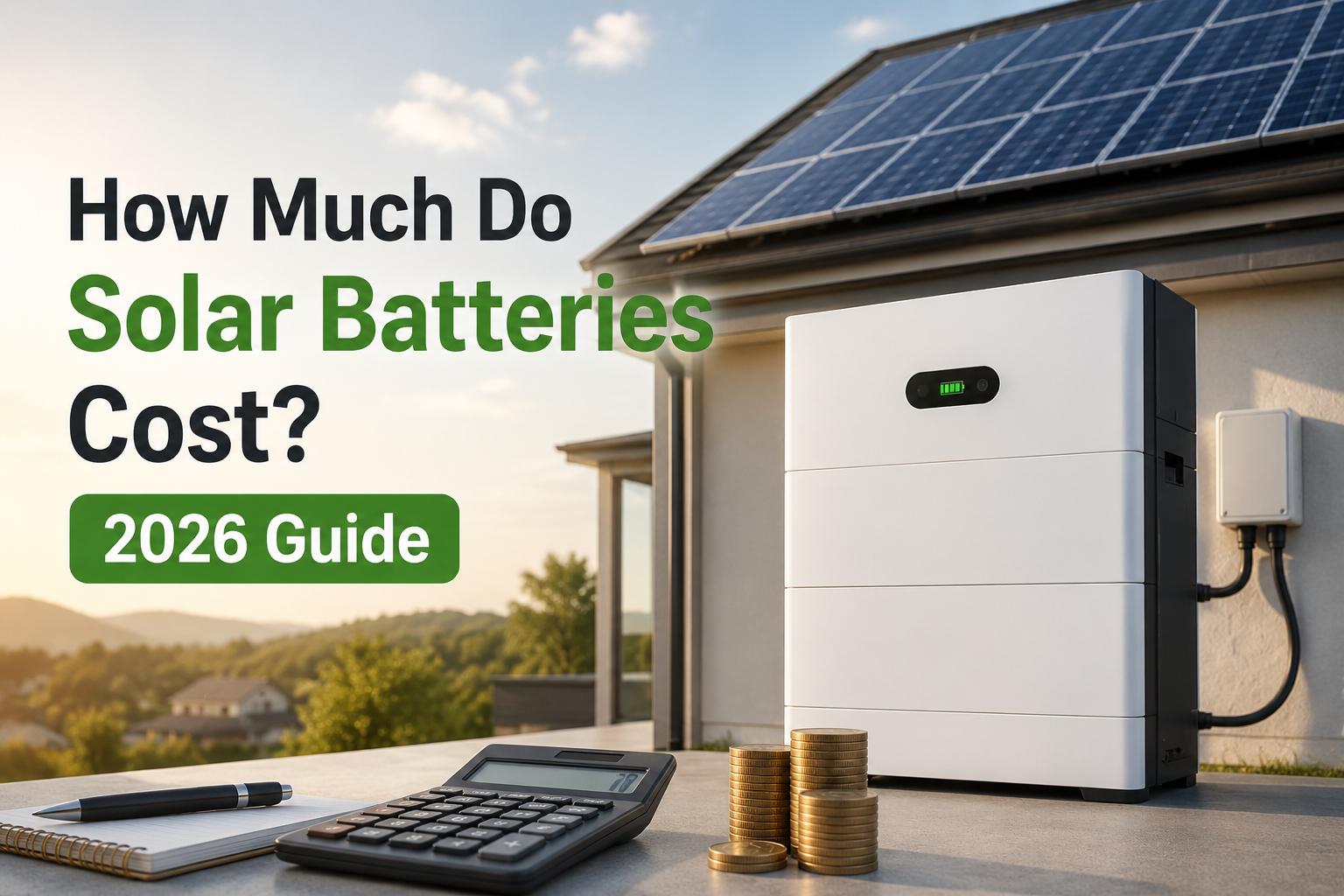
However, as you plan your energy transition, the primary question remains: how much do solar batteries cost in 2026? Typically, a complete home solar battery storage system cost ranges between $5,000 and $28,000+ fully installed in 2026, depending on your capacity needs, installation complexity, and local utility rates.
How Much Do Solar Batteries Cost? Typical 2026 Pricing
When calculating your potential investment, it is helpful to break down typical costs by the scale of your property and the specific storage capacity you require.
Typical Installed Cost by Home Size
In 2026, the gross installation cost for residential battery storage (including hardware, smart gateways, labor, and permitting, before any rebates) generally falls into three main tiers:
System Scale & Capacity | Typical Installed Cost | Primary Use Case |
Small Home / Critical Loads Only(5 kWh to 10 kWh) | $5,000 to $10,000 | Backing up essential circuits, such as refrigerators, Wi-Fi, lights, and device chargers. |
Medium Home / Standard Configuration(10 kWh to 15 kWh) | $9,000 to $16,000 | Covering evening peak-hour usage and protecting a standard single-family home during a 24-hour outage. |
$15,000 to $28,000+ | Running heavy appliances (central AC, well pumps), charging electric vehicles, or providing multi-day off-grid resilience. |
Note: A true “whole-home comfort backup” covering central air conditioning and heavy appliances can exceed $85,000.
Typical Cost Per kWh of Storage
When comparing quotes, the most useful metric is cost per kilowatt-hour of usable storage. The following figures are provided for reference:
- Hardware only (LFP battery pack): $400–$850/kWh nameplate
- Fully installed (all-in): $700–$1,300/kWh nameplate
- Per usable kWh (after accounting for depth of discharge): $875–$1,625/usable kWh
LFP (lithium iron phosphate) is the dominant chemistry in 2026, and for good reason — it’s the safest, longest-lasting, and most cost-effective over the battery’s full lifetime.
Hidden Costs Most Homeowners Overlook
The hardware price tag is just the starting point. Here are the costs that often catch buyers off guard:
- Installation labor — retrofit vs. new install
Adding a battery to an existing solar system (AC-coupled retrofit) typically costs more in labor than pairing a battery with a brand-new solar installation (DC-coupled). Retrofit work often requires additional wiring runs, a separate battery inverter-charger, and a second round of permitting — all of which add up. Bundling solar and storage from the start is almost always the more cost-efficient approach. - Inverter upgrades
New installations use a single hybrid inverter to manage both solar generation and battery storage. If you’re retrofitting a battery onto an existing system and your current inverter isn’t compatible, you may need to replace or supplement it — an expense that varies significantly by brand, capacity, and local labor rates. - Electrical panel upgrades
Older homes with lower-capacity electrical panels may not safely support the added load of a solar-plus-battery system. Upgrading to a higher-capacity panel is a common requirement during installation and can be one of the more significant unexpected costs, particularly in properties with aging wiring or outdated infrastructure. - Permits, inspections, and local compliance
Battery storage systems are subject to electrical and fire safety regulations that vary by country and municipality. Permit fees, utility interconnection approvals, and fire safety inspections are standard requirements in most markets. Compliance costs differ widely by jurisdiction — and if a system doesn’t meet local standards (such as required safety certifications), re-submission and re-inspection add both cost and delay. - Backup load subpanel
If you want your battery to power only selected critical circuits during an outage — rather than the whole house — an electrician will need to install a separate subpanel and re-route specific circuits to it. This is a labor-intensive process that adds a meaningful line item to the overall installation cost, regardless of location.
Who Needs to Buy a Solar Battery?
Ideal Solar Battery Users
l Homes in high-electricity-price regions
If you’re in California, Germany, or other areas with high retail electricity rates, a battery dramatically improves your return on investment. For instance, under California’s NEM 3.0 policy, excess solar exported to the grid earns very little — storing it in a battery and using it yourself is far more valuable.
l Users on time-of-use (TOU) or demand-based billing
TOU rates can spike 3–5x higher in the evening peak window (typically 4–9 PM). A battery lets you charge during cheap off-peak hours and discharge during expensive ones — a strategy called TOU arbitrage.
l Homes with frequent power outages
Grid-tied solar systems automatically shut down when the grid goes out (a safety requirement). Only a battery + automatic transfer switch keeps your power on. For homes in hurricane zones, wildfire regions, or areas with an aging grid, a battery is a meaningful safety upgrade.
l Off-grid and energy independence seekers
For remote properties or those who simply want to minimize dependence on utilities, a battery is not optional — it’s the core of the system.
Who May Not Need a Solar Battery
A battery may be difficult to justify financially when:
- The utility offers strong retail-rate net metering.
- Electricity is inexpensive and charged at a flat rate.
- Power outages are rare.
- The household uses very little electricity.
- Most solar electricity is already consumed directly during the day.
- Under favorable net metering, daytime solar exports can offset later grid consumption without requiring a physical battery.
Key Factors That Influence Solar Battery Storage Cost
1. Battery Chemistry and Brand
LFP (LiFePO₄) dominates in 2026 — holding over 80% of the residential storage market — thanks to its superior thermal stability, 6,000–10,000 cycle lifespan, and competitive lifetime cost per kWh.
NMC batteries offer higher energy density but shorter cycle life and greater price sensitivity due to cobalt and nickel supply chains. Furthermore, premium brands, integrated controls, stronger warranties, and advanced monitoring usually cost more.
2. Storage Capacity (kWh)
More capacity means more cost — but also better cost efficiency per kWh, since inverters, permits, and labor are largely fixed costs spread across a larger system. Always compare cost per usable kWh, not nameplate capacity. LFP typically operates at 80%-90% depth of discharge, so a 10 kWh nameplate battery delivers about 8-9 kWh of usable energy.
3. Power Rating (kW) and Performance Features
Capacity tells you how much energy is stored; power rating tells you how fast it can be delivered. A battery with a higher continuous output can run larger appliances simultaneously.
Round-trip efficiency (RTE) — how much energy you recover per charge cycle — matters too. Modern LFP systems achieve 90–95% RTE; lead-acid systems drop to 70–80%, increasing long-term operating costs.
4. Installation Complexity
DC-coupled new installations are cheaper and more efficient. AC-coupled retrofits onto existing solar systems add hardware and labor costs. Additionally, older homes often trigger panel upgrades that add thousands to the total.
5. Location and Local Market
Battery installation location affects not only battery costs but also installation and logistics expenses. For example, labor rates in the US Northeast run 40–60% higher than in southern states. Remote locations may add hazardous-material shipping costs for batteries. Local utility interconnection fees vary considerably by jurisdiction.
6. Incentives and Tax Credits
Available incentives vary significantly by country, state, and utility provider — and they change frequently. Many regions offer tax credits, rebates, or feed-in tariff programs that can meaningfully reduce your upfront cost or shorten your payback period. Always check with your local authority or a qualified installer for the most current incentives available in your area before finalizing your budget.
How to Estimate Your Own Solar Battery Budget
Step 1: Identify your energy goals.
Determine if your property requires critical circuit backup (5 to 10 kWh), complete whole-home backup (20 to 30 kWh), or daily TOU tariff arbitrage.
Step 2: Analyze your electricity bills.
Evaluate your daily consumption patterns and check for high peak-to-valley rate differentials or low utility export rates.
Step 3: Choose your integration type.
Determine whether you will deploy a storage-only system or bundle it with a new solar installation, keeping in mind that bundled installations reduce redundant mobilization and labor fees.
Step 4: Get multiple quotes and compare.
Analyze quotes using the cost per usable capacity formula:
Step 5: Estimate your payback period.
Divide your net system cost by your projected annual utility savings. For high-rate regions under net billing, payback periods generally range from 8 to 12 years. Ensure you budget for a battery replacement around year 12 to 15, as solar panels typically outlive chemical battery cells.
Sunway: Premium Solar Battery Storage Solutions for Home & Business
Whether you are a homeowner seeking backup security or a solar installer, developer, or EPC contractor looking for robust commercial equipment, Sunway Solar delivers high-performance energy storage solutions tailored to your exact needs.
As a leading global manufacturer with a 10 GW export capacity and over $50 million in annual shipments across Europe, South Africa, South America, and the Middle East, Sunway bridges the gap between premium Tier-1 hardware and competitive factory-direct pricing.
Advanced Residential Storage
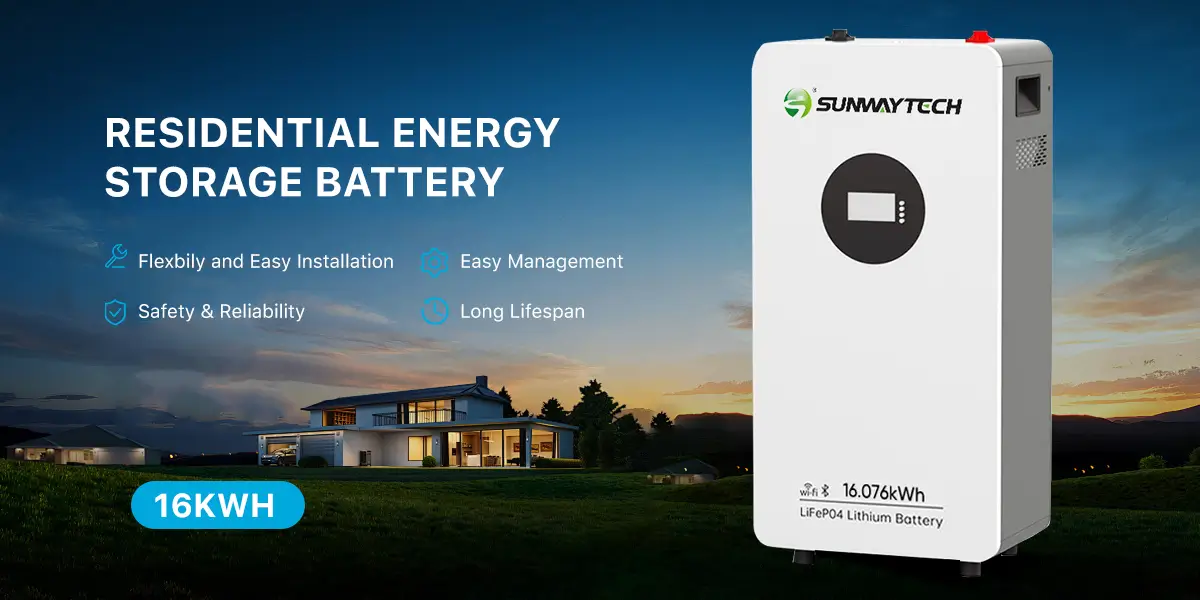
- SUNWAY Floor-Mounted Home Battery (SW51B314TW2): This premium 16.07 kWh (314 Ah) flagship floor unit features an intelligent self-developed BMS, integrated interactive display, and Bluetooth connectivity. Utilizing safe LiFePO4 chemistry, it offers a 10-year design life with over 6,000 cycles at 80% DoD.
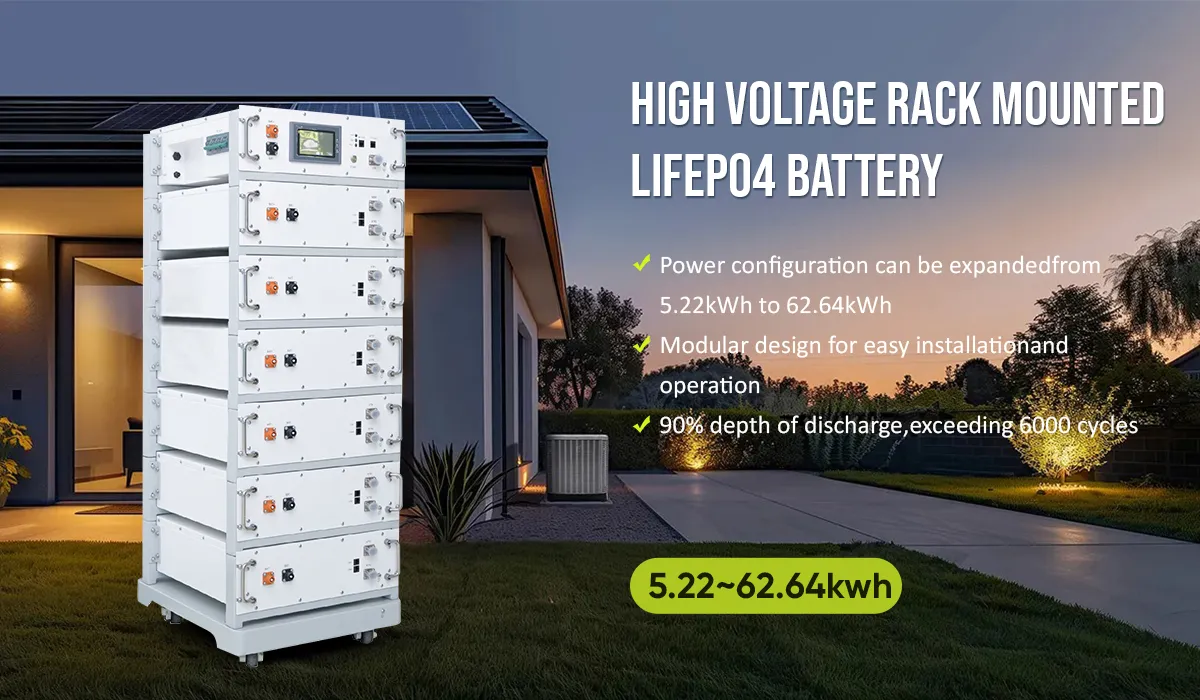
- HRH-5200 Rack-Mounted System: A highly modular, scalable solution ranging from 5.22 kWh to 62.64 kWh (by stacking 4 to 12 modules). For enhanced safety assurance, it features a three-level overcurrent protection BMS and an integrated passive thermal aerosol fire extinguishing agent that automatically activates if safe temperature thresholds are breached.
Commercial & Industrial (C&I) Systems
Outdoor Cabinets and Containers: For commercial applications, developers, and agricultural energy integrators, Sunway designs high-performance commercial cabinets (like the 50–100kW Outdoor Cabinet ESS integrated with Growatt inverters) and utility-scale 1,000kW / 2,150kWh containerized systems.
All Sunway equipment is backed by world-class certifications including TUV, IEC, CE, ISO, INMETRO, and UL, ensuring seamless local compliance and utility interconnection approval worldwide. Backed by a 5,000-square-meter global warehouse network, Sunway guarantees fast delivery and local after-sales technical support.
Interested in exploring Sunway solutions? Contact our team for product details, free project assessments, online consultations, and assistance connecting with local installation partners!