
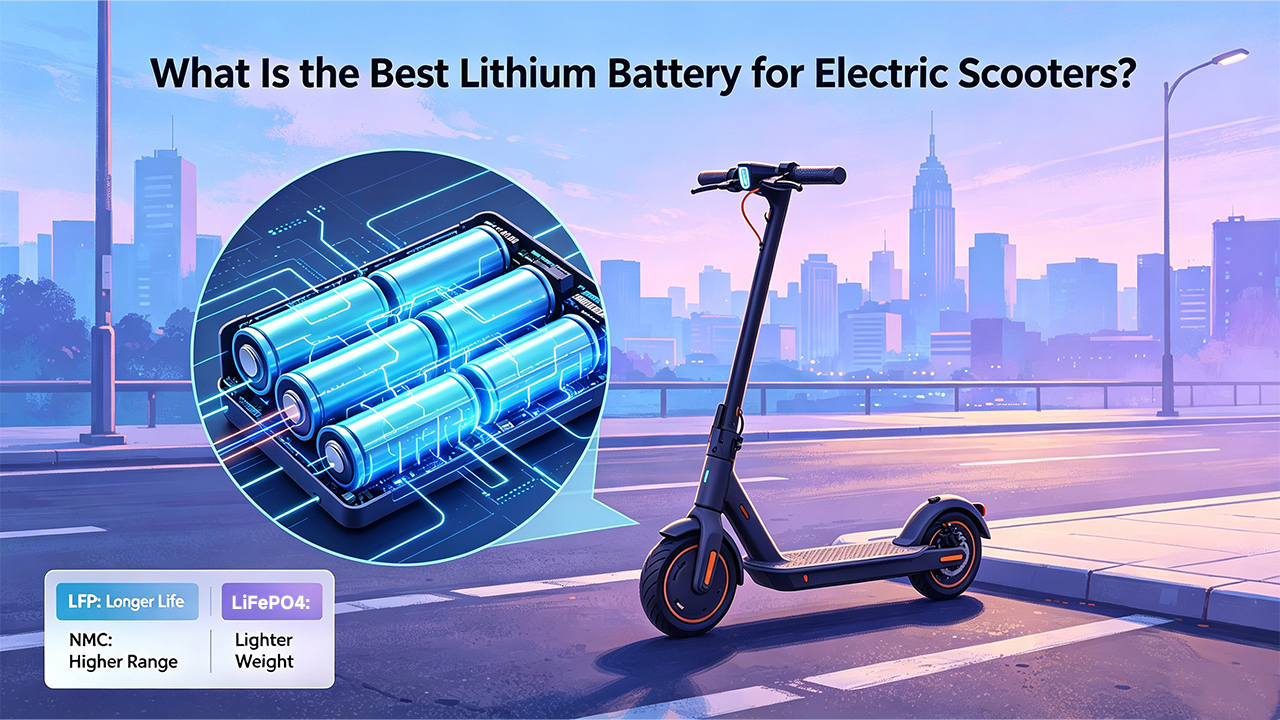
The best lithium battery for electric scooters is the one that matches the vehicle’s range target, motor power, available installation space, operating temperature, charging strategy, and daily duty cycle. In practice, the main choice is often between high-energy-density NMC batteries and durable, thermally stable LiFePO4 batteries.
For a lightweight, space-constrained scooter, NMC may be the better fit. For frequent-use commercial scooters, tricycles, delivery vehicles, or other light electric vehicles, LiFePO4 can offer a strong balance of durability, safety-oriented design, and long-term operating value.
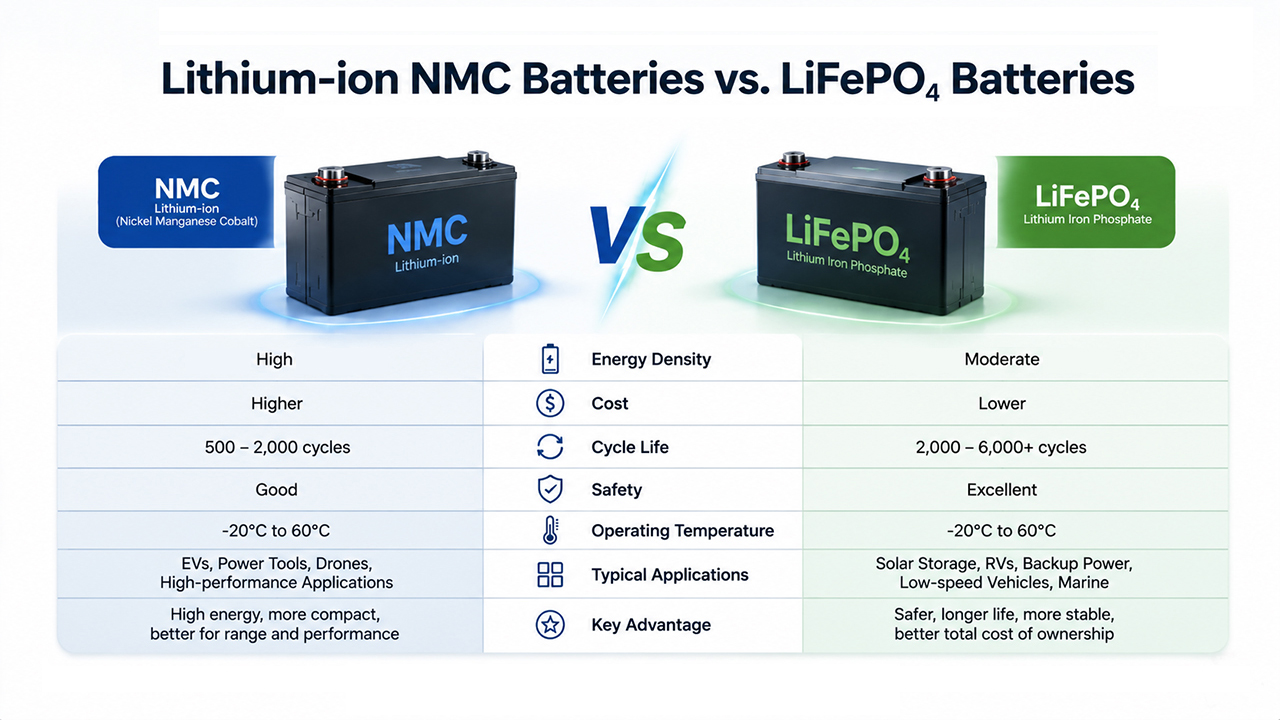
NMC vs. LiFePO4: A Clear Comparison Table
Factor | NMC Battery | LiFePO4 Battery |
Cathode material | Nickel, manganese, and cobalt oxide | Iron phosphate |
Energy density | Generally higher, about 150–250 Wh/kg | Generally lower, about 90–160 Wh/kg |
Nominal cell voltage | About 3.6–3.7 V | About 3.2–3.3 V |
Battery size and weight | Smaller and lighter for the same Wh target | Larger and heavier for the same Wh target |
Cycle-life potential | About 500–2,000 cycles | About 2,000–6,000+ cycles |
Thermal stability | Lower, especially for high-nickel NMC | Higher due to its stable phosphate structure |
Discharge characteristic | Can be optimized for high energy or high power | Relatively flat discharge-voltage curve |
Cost per kWh | Typically higher due to nickel and cobalt content | Typically lower; LFP packs were over 40% cheaper per kWh than NMC on average in 2025 |
Main advantage | Higher energy density | Long cycle life, thermal stability, and lower material-cost potential |
Main trade-off | Higher cost and more demanding thermal/BMS design | Lower energy density and a larger pack for comparable energy |
Why Are LFP Batteries the Mainstream Choice for Scooters?
While both battery chemistries have their advantages and limitations, LFP batteries are mainly chosen for scooters for the following reasons:
- High Safety and Thermal Stability: Scooters often face complex outdoor environments and irregular charging habits. LFP batteries have a significantly lower risk of thermal runaway, providing a much higher safety margin.
- Exceptional Cycle Life: Scooters typically require frequent charging. LFP batteries support thousands of charge-discharge cycles, meaning the battery’s lifespan can often cover or even exceed the service life of the vehicle itself.
- Lower Maintenance and Manufacturing Costs: By not relying on expensive metals like cobalt and nickel, LFP batteries are not only more cost-effective to produce but also result in lowlong-term maintenance costs.
These reasons make LFP scooter batteries ideal for diverse applications, as showcased in Sunway’s LFP scooter battery product lineup.
Sunway Series | Battery Technology | Voltage Platforms | Nominal Energy Range | Maximum Discharge Current | Typical Applications |
Room-temperature or heated LiFePO4 | 60 V and 72 V | 1,344–3,225.6 Wh | Up to 65 A | E-bikes, electric scooters, small tricycles, and personal mobility vehicles | |
Room-temperature or heated LiFePO4 | 60 V and 72 V | 3,584–5,529.6 Wh | Up to 100 A | Passenger tricycles, cargo tricycles, delivery vehicles, and utility vehicles | |
Room-temperature or heated LiFePO4 | 60 V and 72 V | 6,400–15,052 Wh | Up to 200 A | Large tricycles, low-speed four-wheel vehicles, cargo vehicles, and transport equipment | |
Room-temperature or heated LiFePO4 | 24 V and 48 V | 1,843.2–14,336 Wh | Up to 150 A | Forklifts, stacker trucks, AGVs, cleaning machines, sightseeing vehicles, and industrial electric equipment |
Key features of Sunway LiFePO4 scooter batteries include:
- Up to nine levels of BMS protection: The intelligent BMS helps protect the battery against overcharging, over-discharging, over-current, short circuits and abnormal temperatures. This multi-layer protection supports safer and more stable operation under changing loads and working conditions.
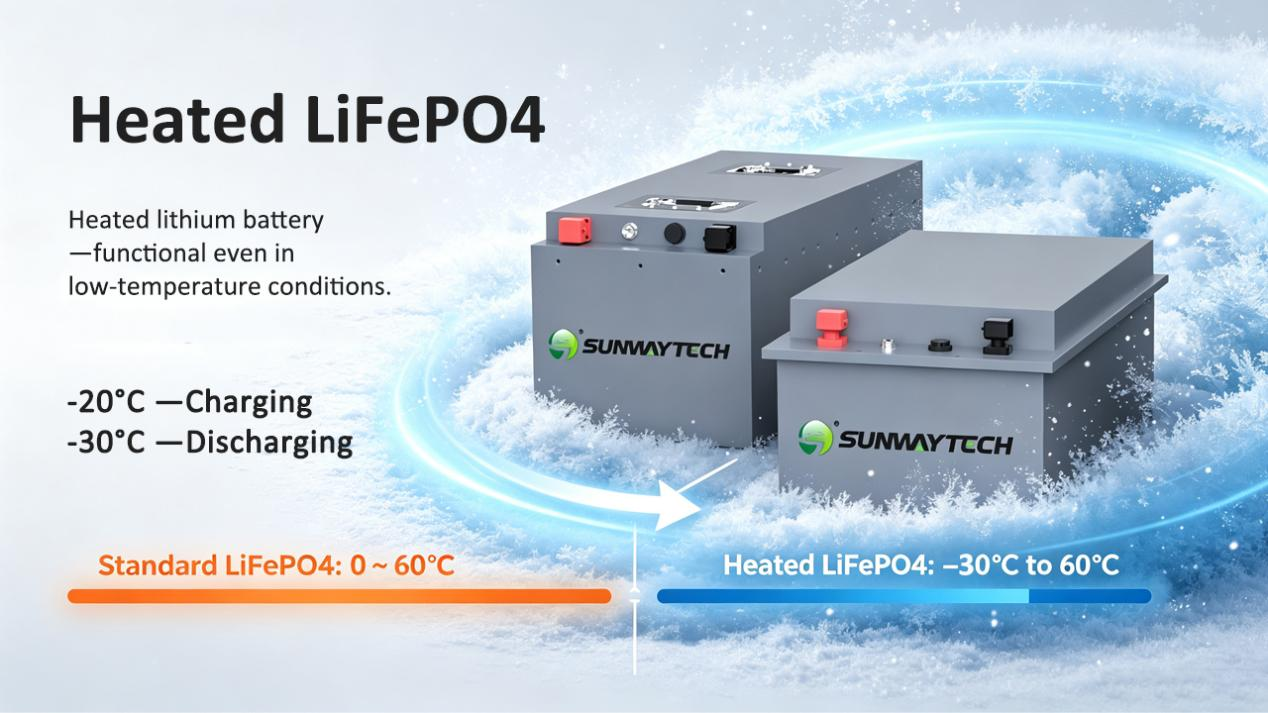
- Heated options for cold-weather charging: Selected models incorporate a heating function that raises the cell temperature before charging. This allows the battery to operate more reliably in cold environments where a standard LiFePO₄ battery may be unable to charge safely. For example, heated SUNWAY Ultra batteries support charging at temperatures as low as −20°C and discharging down to −30°C. Standard versions generally support charging from 0°C to 60°C, making the heated option more appropriate for vehicles operating in colder regions.
- Real-time battery monitoring: Bluetooth connectivity allows operators to check battery status and health from a connected device. Easier access to operating data can support preventive maintenance and reduce unexpected downtime.
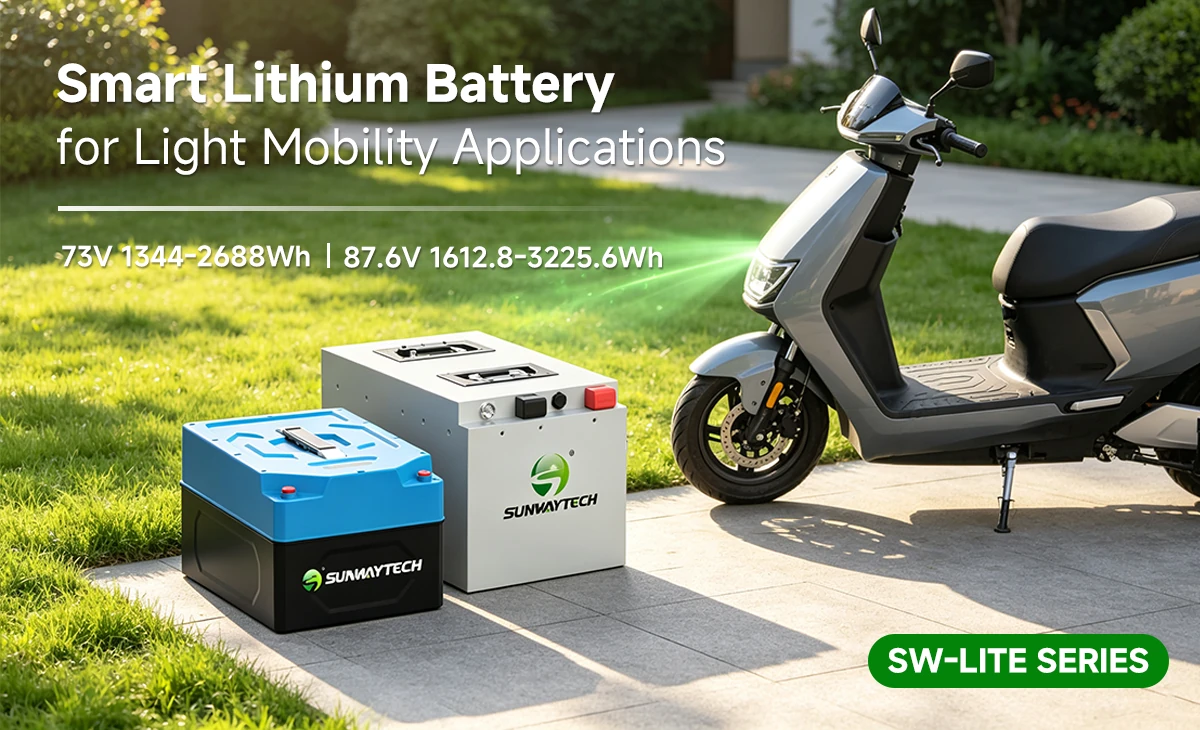
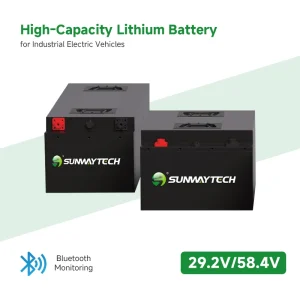
Picture shown: SUNWAY LITE SERIES Smart Lithium Battery for Light Mobility Applications
How to Choose the Best Lithium Battery for Electric Scooters
Understanding electric scooter battery chemistry is the first step. These seven steps will help you choose the right battery and find a manufacturer that can meet your requirements.
1. Select the Right Battery Chemistry
Start with the vehicle’s primary design goal.
If compact size, low weight, and high energy density are the main priorities, assess NMC. If frequent use, long-term durability, commercial operation, and thermal stability are more important, assess LiFePO4.
The chemistry decision should follow the use case—not only marketing claims.
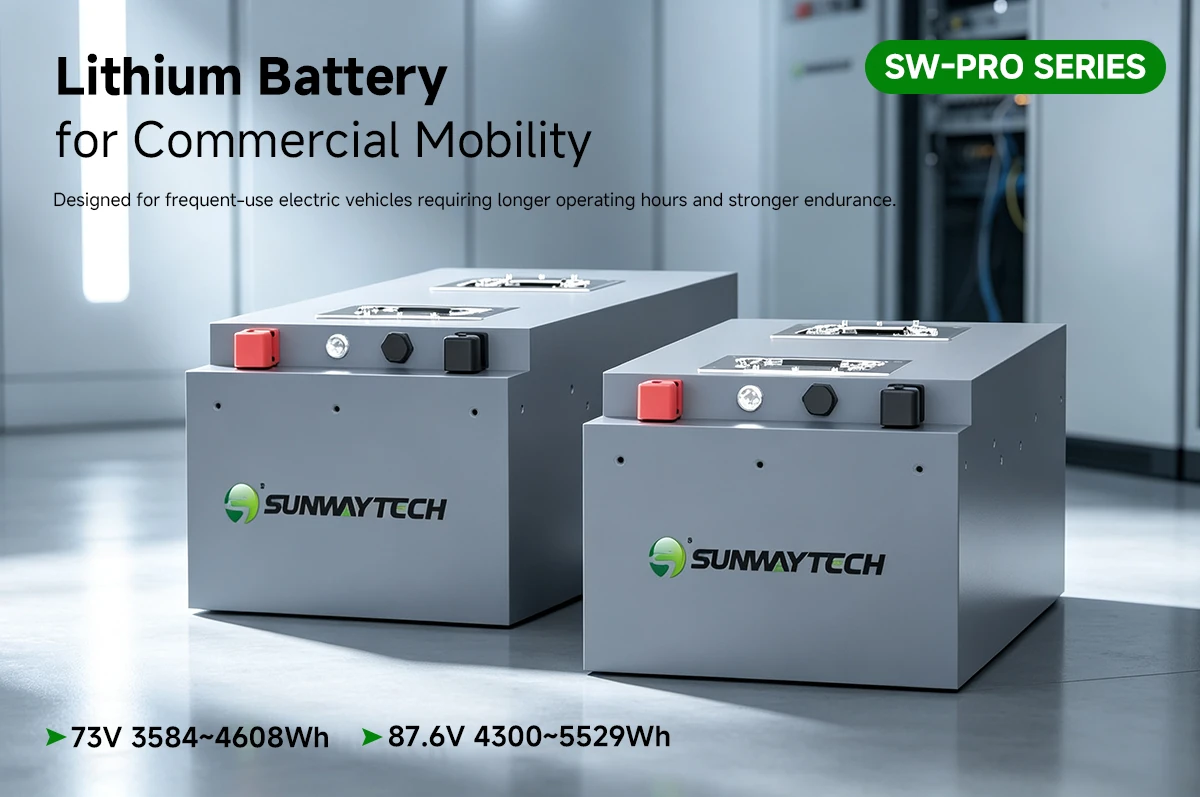
Picture shown: SUNWAY PRO SERIES Lithium Battery Solution for Commercial Mobility
2. Match Voltage and Capacity
The battery voltage must match the motor controller, motor, charger, and electrical architecture. Common mobility platforms may use 48 V, 60 V, or 72 V systems, while industrial equipment may use other voltages.
Capacity is usually stated in amp-hours (Ah), but watt-hours give a clearer picture of stored energy:
Battery Energy (Wh)=Nominal Voltage (V)×Capacity (Ah)
For example, a 72 V, 40 Ah battery stores approximately 2,880 Wh of nominal energy. That figure is useful for comparing pack sizes, but it does not guarantee a specific real-world range.
3. Check Discharge Performance
A battery must deliver enough current for the vehicle’s actual load. This includes both continuous discharge current and short peak current for acceleration, climbing, and heavy cargo conditions.
The basic electrical relationship is:
Power (W)=Voltage (V)×Current (A)
A 72 V scooter requiring 3,600 W of electrical power would theoretically need about 50 A. In real designs, battery selection should include a safety margin for peak demand, voltage sag, cable losses, BMS limits, temperature, and motor-controller behavior.
Do not select an electric scooter lithium battery based on Ah alone. A high-capacity pack may still be unsuitable if its cells or BMS cannot provide the necessary discharge current.
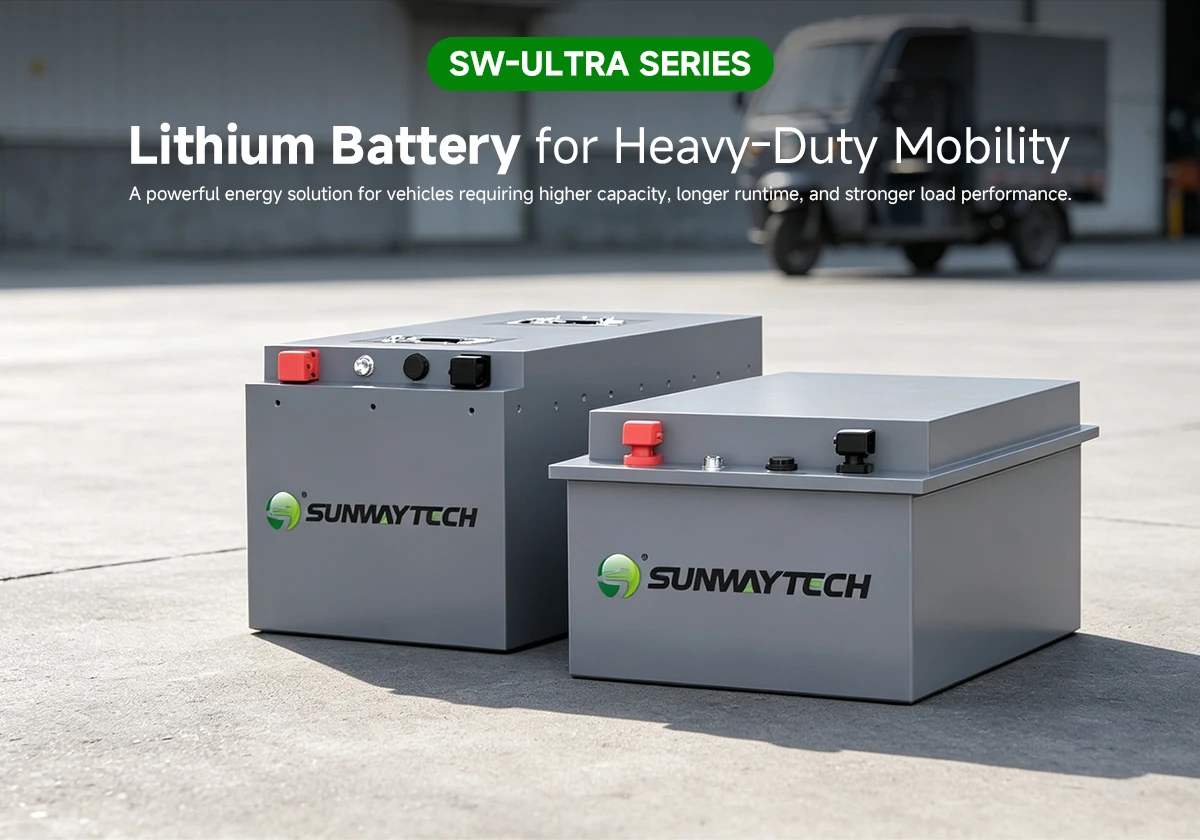
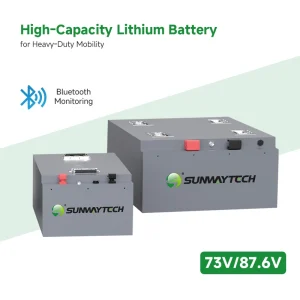
Picture shown: SUNWAY ULTRA SERIES High-Capacity Lithium Battery for Heavy-Duty Mobility, up to 200A Discharge Current
4. Evaluate the Battery Management System
The BMS is a critical safety and performance component. A well-designed BMS should help protect the battery from:
- Overcharging
- Over-discharging
- Overcurrent
- Short circuits
- Overtemperature conditions
- Charging or discharging outside permitted temperature limits
For fleet, commercial, or smart mobility applications, BMS communication and diagnostics can also be important. Ask whether the battery can provide state-of-charge information, fault alerts, communication interfaces, and operational data needed by the vehicle system.
5. Confirm Mechanical and Environmental Compatibility
The battery must physically fit the vehicle and withstand its operating environment. Review:
- Battery dimensions and total mass
- Mounting method and vibration resistance
- Connector type, cable length, terminals, fuse, and polarity
- Clearance for installation, ventilation, and service
- Charge and discharge temperature range
- Exposure to water, dust, humidity, shock, and road vibration
A battery with excellent electrical specifications can still fail as a practical choice if it does not fit the chassis or operating environment.
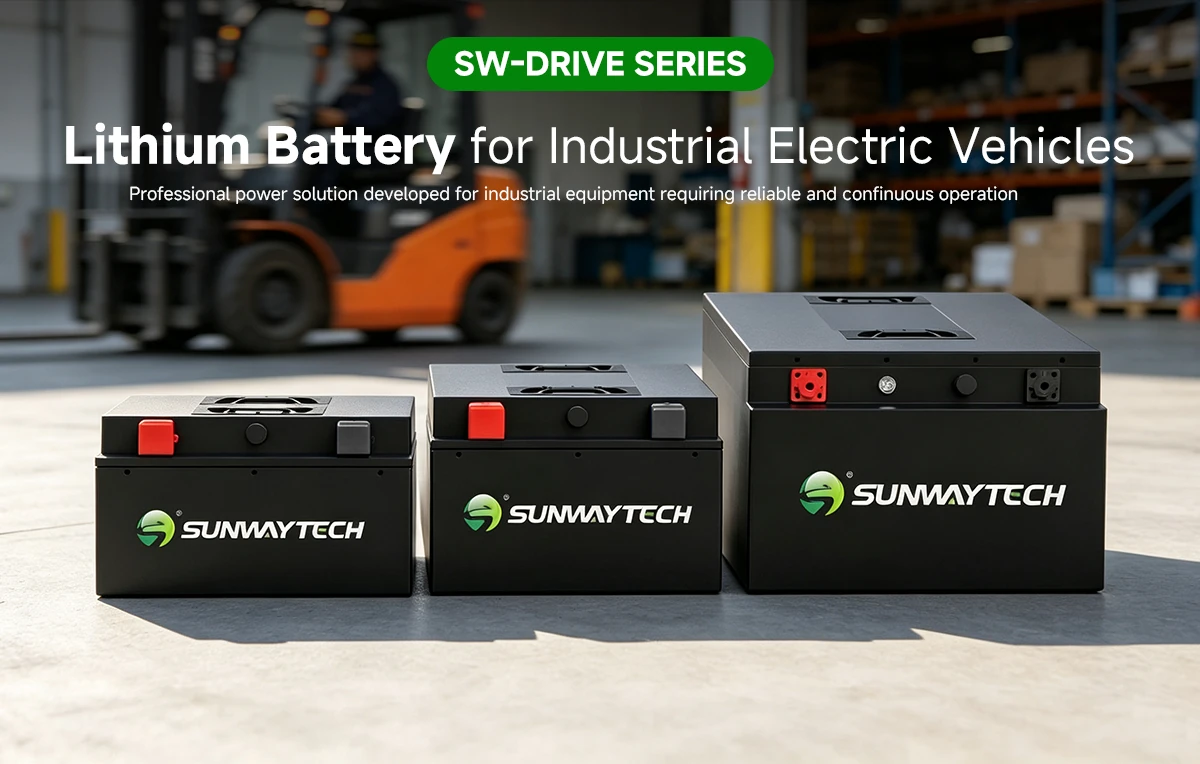
Picture shown: SUNWAY DRIVE SERIES Lithium Battery Solution for Industrial Electric Vehicles
6. Verify Safety and Compliance Documentation
Battery documentation is essential for vehicle manufacturers, distributors, importers, logistics teams, and fleet operators.
For instance, in the United States, UL Solutions identifies UL 2271 for light-EV batteries and UL 2272 for personal e-mobility electrical systems. For transport, lithium cell and battery types must pass applicable UN 38.3 tests before shipment, according to IATA’s battery guidance.
Always ask the manufacturer which documents apply to the exact battery model, target market, and transport route. Requirements differ by country, vehicle type, and shipping method.
7. Choose a Capable Battery Manufacturer
A capable battery supplier should offer more than a battery catalog. Look for a manufacturer that can support:
- Cell and pack selection for the intended vehicle
- Voltage, capacity, current, enclosure, and connector customization
- BMS matching and charging-system compatibility
- Product testing and quality-control processes
- Technical documentation and logistics support
- Reliable production capacity, delivery coordination, and after-sales service
The best battery partnership reduces engineering risk before the vehicle reaches the market.
Find the Right Scooter Battery Solution
The best electric scooter lithium battery depends on the vehicle’s design and duty cycle. NMC suits applications that prioritize high energy density and low weight, while LiFePO4 is ideal for frequent-use, commercial, and heavy-duty mobility requiring stable, long-lasting performance.
Sunway offers LiFePO4 battery solutions for light scooters, commercial vehicles, and industrial electric equipment. Contact Sunway to discuss the right voltage, capacity, discharge current, and battery configuration for your project!