
Battery energy storage systems (BESS) are the backbone of modern power grids, enabling seamless renewable integration, peak shaving, and reliable backup power. However, a potential challenge exists: battery thermal runaway. Understanding and mitigating this risk is essential for ensuring long-term operational safety, protecting high-value assets, and maintaining public trust in green energy infrastructure.
What is Thermal Runaway in BESS?
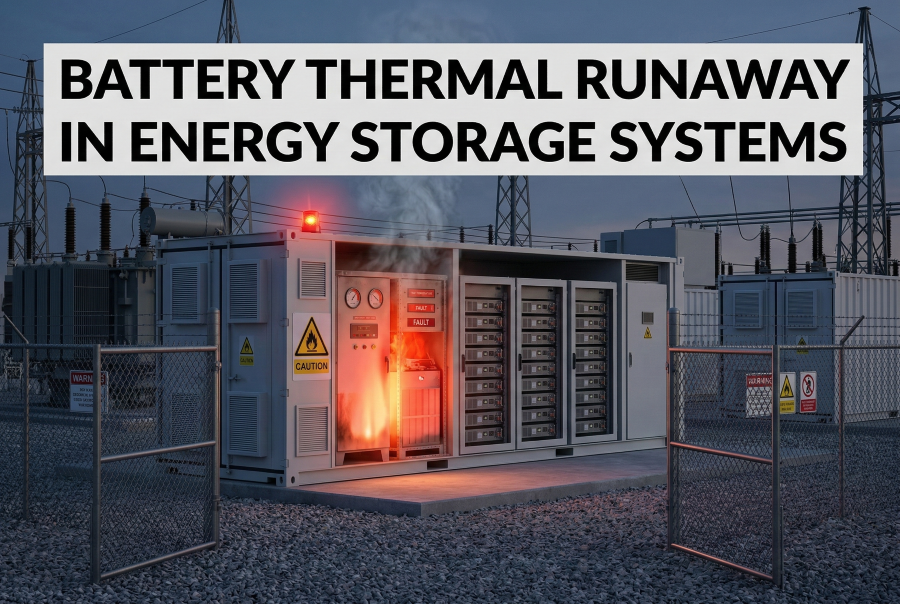
In the context of a battery energy storage system, thermal runaway is a highly dangerous electrochemical phenomenon where a cell’s temperature increases uncontrollably. This occurs when the internal heat generation rate exceeds the cell’s ability to dissipate it. Once a certain temperature threshold is crossed, a self-sustaining, exothermic reaction begins, causing temperatures to spike rapidly—often reaching between 800°C and 1000°C within seconds.
The danger in a large-scale BESS lies in thermal propagation. When a single cell fails and enters thermal runaway, it releases an immense amount of heat. If this heat isn’t effectively managed or isolated, it spreads to adjacent cells through conduction and radiation. This “domino effect” causes a secondary failure that can move from a single module to an entire rack, eventually engulfing the whole container.
The hazards resulting from this process are severe.
- First, it leads to intense fires that are notoriously difficult to extinguish because lithium-ion batteries can provide their own oxygen source for combustion.
- Second, the evaporation of electrolytes releases highly flammable gases like hydrogen and carbon monoxide. In enclosed containers, these gases can accumulate and lead to devastating explosions.
- Finally, the process emits toxic smoke, including hydrogen fluoride, posing significant health risks to first responders and the surrounding environment.
Common Causes of Thermal Runaway in BESS
Preventing battery thermal runaway starts with identifying the catalysts. These typically fall into four categories:
1. Mechanical Failure
Physical impacts or mechanical stress can alter a battery’s internal structure. This includes collisions during transport, drops during installation, or punctures from external objects. Such abuse can tear the separator—the thin film between the anode and cathode—leading to an internal short circuit. This instantaneous release of energy generates the heat required to trigger the runaway process.
2. Electrical Abuse
Electrical abuse involves operating the battery outside its designed voltage or current limits. Overcharging is particularly dangerous as it causes lithium to plate onto the anode surface as “dendrites,” which can eventually pierce the separator. Similarly, external short circuits or high-current discharges generate excessive Joule heat, destabilizing the cell’s internal chemistry.
3. Thermal Abuse
This occurs when the BESS is exposed to temperatures exceeding its safe operating limit. Causes range from faulty cooling systems and extreme ambient heat to external fires from nearby equipment. High temperatures accelerate chemical side reactions within the battery, leading to self-heating and separator melting.
4. Internal Defects
Even without external abuse, a cell can fail due to manufacturing flaws. Microscopic metal contaminants, electrode coating inconsistencies, or burrs on the current collectors can exist as “latent defects.” While the battery may perform normally for months, these defects can evolve into internal shorts over many charge-discharge cycles, leading to sudden, unprovoked failure.
Key Prevention and Battery Thermal Runaway Protection Strategies
To ensure battery energy storage system safety, a multi-layered approach to protection and mitigation is required.
1. System Design and Thermal Management
Modern BESS design must prioritize thermal isolation. Using firewalls or specialized aerogel materials between cells and modules helps block heat propagation. However, the most effective preventative measure is an active thermal management system.
High-efficiency cooling—whether via air or liquid—ensures cells remain within their optimal temperature window, preventing the initial onset of heat accumulation. Additionally, containers should be equipped with deflagration panels to vent pressure and prevent explosive force in the event of gas buildup.
2. Advanced BMS and Sensing Components
The battery management system (BMS) acts as the brain of the storage system. A high-tier BMS monitors voltage, current, and temperature at the cell level in real-time. If an anomaly is detected, the BMS can instantly isolate the affected string or module.
Integration of “off-gas” sensors provides a critical early warning; these sensors can detect electrolyte vapors minutes before a fire actually starts, allowing for emergency shutdowns or vent activations.
3. Fire Suppression Systems
While suppression systems might not stop the internal chemical reaction of a failing cell, they are vital for controlling external flames and cooling the surrounding environment. Common solutions include Novec 1230, heptafluoropropane, or water mist. These systems work in tandem with smoke and heat detectors to provide automated, localized fire suppression within the cabinet.
4. Standards, Siting, and Operations
Adherence to international standards like UL 9540A, UL 1973, and NFPA 855 is non-negotiable. These standards evaluate how fire spreads and dictate safe distances between equipment and buildings.
Furthermore, rigorous preventive maintenance and well-rehearsed emergency response plans (ERPs) ensure that if a thermal event does occur, the impact is minimized through expert intervention.
Sunway: Leading the Way in Battery Energy Storage System Safety
Sunway provides robust energy storage solutions designed specifically to address the complexities of thermal management and fire safety for commercial and industrial (C&I) applications. By integrating high-quality lithium iron phosphate (LFP) chemistry—inherently more thermally stable than NCM alternatives—we ensure a safer foundation for energy storage.
l SWMonet-50C: Intelligent Air-Cooled System
For businesses seeking a compact and reliable solution, the SWMonet-50C outdoor cabinet offers 50kW/100kWh of capacity. This all-in-one system integrates the PCS, BMS, EMS, and fire protection into a single, weather-resistant enclosure. Its intelligent air-cooling module prevents heat accumulation, while the front-maintenance design ensures that safety inspections are easily performed.
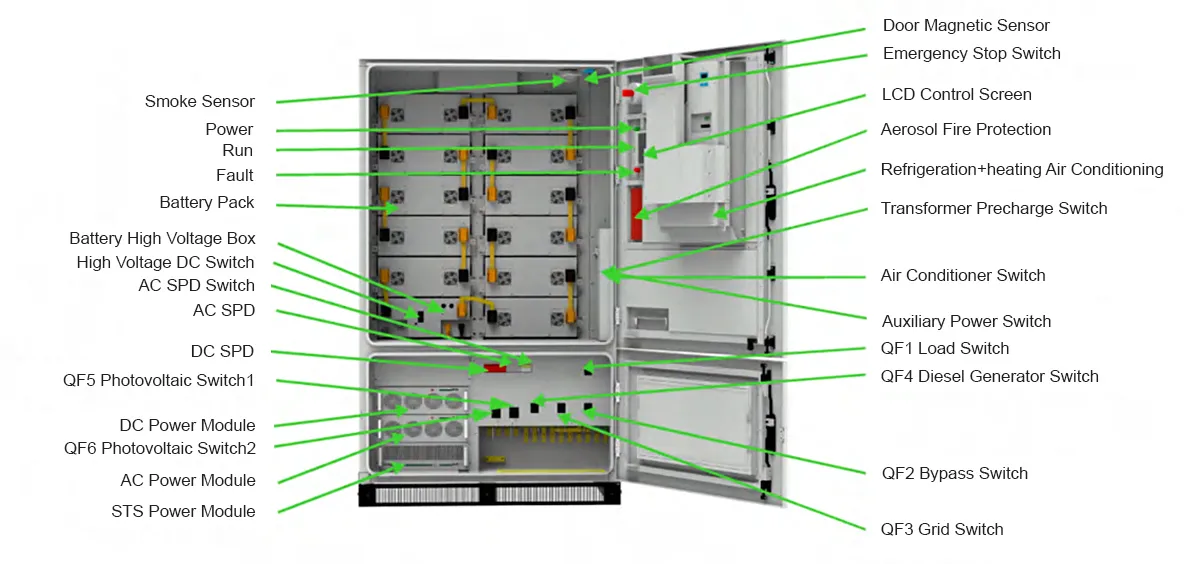
Picture shown: SWMonet-50C internal structure
l SWMonet-125CL: Advanced Liquid-Cooled System
For larger industrial demands, the SWMonet-125CL (100kW/261kWh) utilizes liquid-cooling technology. Liquid cooling offers superior heat dissipation and temperature uniformity across the battery rack, which is critical for preventing the localized hot spots that lead to thermal runaway. This system is IP55 rated and comes highly pre-integrated, reducing installation risks and ensuring maximum reliability in harsh environments.
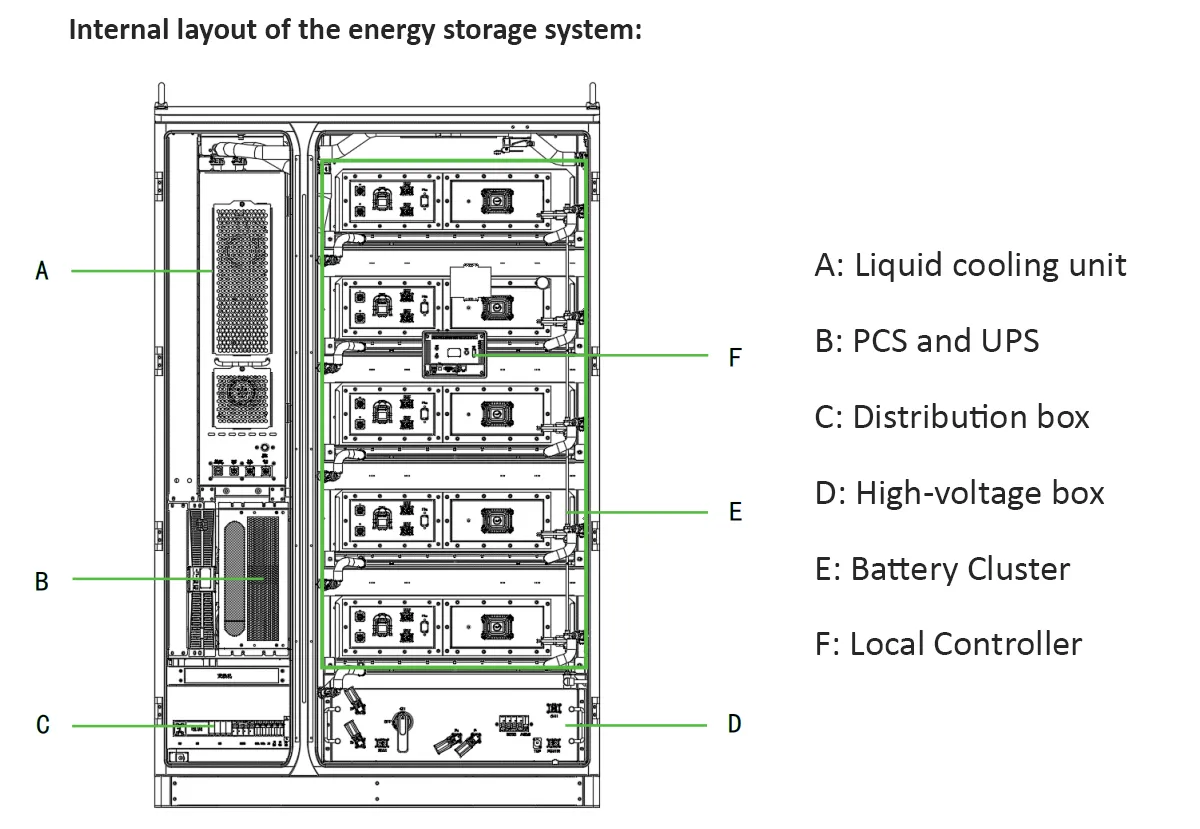
Picture shown: SWMonet-125CL internal structure
Integrated Safety Features:
To ensure battery energy storage system safety, Sunway designs systems that feature a multi-tiered safety topology:
- Smart BMS: Real-time monitoring with over-temperature alarm protection and automatic fault isolation.
- Automated Firefighting: Integrated smoke/heat detectors and heptafluoropropane or aerosol suppression modules provide a final physical line of defense.
- Intelligent Alarms and Linkage: Systems include audible and visual alarms, gas release indicator lights, and emergency stop buttons. All fault data is automatically uploaded to the management system, enabling secure, 24/7 unattended safety monitoring.
Conclusion
Safety is the cornerstone of the energy transition. Whether you are an EPC contractor or a business owner aiming for energy independence, choosing a system with advanced battery thermal runaway protection is the smartest investment for your infrastructure.
To learn more about how Sunway is redefining battery energy storage system safety with our air-cooled and liquid-cooled solutions, contact Sunway for our latest offerings. Together, we build a safer, greener future!