
In 2026, the global shift toward energy independence has made energy storage systems essential for both homeowners and businesses. But you may wonder, how much battery storage do I need? Getting the battery system size right can make the difference between a strong return on investment and frequent, frustrating power shortages.
To answer this question, you should first ask yourself, “What are your energy goals?” In general, these goals can be grouped into three main types:
- Essential Backup During Outages: Your goal is to keep the “must-haves”running—lights, Wi-Fi, refrigeration, and perhaps a medical device—during a grid failure.
- Bill Savings and Time-of-Use Optimization: You want to avoid high utility rates by charging your battery when electricity is cheap (or from solar) and discharging it when rates peak.
- Near Energy Independence or Off-Grid Capability: You are looking for a whole-home battery backup that allows you to operate independently of the grid for days at a time.
Once you know your type, you can follow the step-by-step guide below to calculate your battery storage needs!
How Much Battery Storage Do You Need? A Step-by-Step Guide
Step 1: Understand Your Energy Usage (kWh)
Begin with your electricity bill. Find your monthly kilowatt-hour (kWh) consumption and divide by 30 for a daily average. For accurate sizing during extreme conditions, use your highest-consumption month (typically summer with air conditioning running).
Next, distinguish between critical loads and whole-home loads. Critical loads include refrigerators, lights, medical equipment, and Wi-Fi routers—typically 3–10 kWh per day for most households. Whole-home loads add HVAC, electric water heating, and EV charging, which can push daily consumption to 30 kWh or more. Decide which category matters for your backup scenario.
Step 2: Decide How Long You Need Backup
Backup duration depends on your local grid reliability and weather patterns. For grid-tied systems with outage backup, 1–2 days of autonomy usually suffices. In areas prone to severe storms, plan for 3–5 days. For critical medical or commercial systems, consider 7 days or more.
The basic sizing formula is straightforward:
Daily load (kWh) × Backup days ÷ Depth of Discharge = Required battery capacity
Add a safety factor of 1.2 to 1.3 to account for efficiency losses and conversion inefficiencies.
Step 3: Usable vs Rated Battery Capacity
When browsing battery backup systems, you will see two numbers: “Total/Rated Capacity” and “Usable Capacity.”
This distinction is crucial: a battery’s “rated capacity” is its total storage, but “usable capacity” is what you can actually draw without damaging the battery’s lifespan. Depth of Discharge (DoD) represents the percentage you can safely use. Modern lithium iron phosphate (LiFePO₄) batteries typically achieve 80–90% DoD, while older lead-acid batteries max out at 50%.
For example, if you need 8 kWh of usable energy and choose a battery with 90% DoD, you require approximately 8.9 kWh of rated capacity. Always design around usable capacity, not the advertised total.
Step 4: Typical Battery Size Ranges in 2026
In the current market, certain battery sizes are becoming apparent.
For residential applications, most households start between 5 kWh and 15 kWh. A 7 kWh usable system (10–13 kWh rated) covers basic overnight needs for a typical 3-bedroom home. Whole-home backup or near off-grid living demands 20 kWh to 40 kWh. Modular units in 5 kWh increments (like Sunway’s 5.12 kWh modules) allow precise scaling.
For commercial and small business applications, a small retail shop consuming 25 kWh daily typically requires 30–35 kWh of lithium storage. Industrial peak shaving for facilities with 100 kWh loads often uses 120 kWh or larger systems.
Step 5: How Solar Changes Your Battery Needs
If you have solar panels that act as a “charger,” you may need a battery storage system with significantly less capacity than a battery-only system.
Solar-plus-storage recharges daily from sunlight, so you only need enough battery to cover overnight hours or a single cloudy day. Battery-only systems cannot self-replenish during extended outages—they must be sized for the entire outage duration upfront.
If you live in a region with winter cloud cover, design for your lowest-solar months. Cold temperatures also reduce battery efficiency, so consider adding a capacity buffer or selecting batteries with self-heating features.
Step 6: Don’t Forget Power (kW) vs Energy (kWh)
Think of energy (kWh) as the size of your fuel tank and power (kW) as the size of the fuel pipe. Energy (kWh) determines how long your devices run. Power (kW) determines what you can run simultaneously.
Even with ample kWh reserves, if your inverter or battery lacks sufficient continuous power and surge capacity, you cannot start air conditioners, heat pumps, or well pumps. For whole-home backup, aim for 7–12 kW continuous power with surge capacity for motor starts.
Step 7: Future-Proofing and Scalability
Your energy needs will likely grow. Electric vehicles, heat pumps, and home expansions all increase consumption. Build in a 15–25% capacity buffer from the start, or select modular systems that allow easy parallel expansion.
Also consider battery lifespan. Quality LiFePO₄ batteries deliver 5,000+ cycles at 80% DoD, translating to 10–15 years of service. However, all batteries degrade over time. Warranties typically guarantee 70–80% of initial capacity after 10 years, so sizing slightly above your minimum requirement ensures reliable performance throughout the battery’s life.
Quick Battery Storage Sizing Examples
Scenario | Goal | Recommended Capacity |
Basic Residential | Overnight solar self-consumption | 5 – 13 kWh |
Whole Home Backup | 24-hour full independence | 20 – 30 kWh |
Off-Grid Cabin | 3 days of autonomy (Low draw) | 15 – 25 kWh |
Small Business | Peak shaving & critical servers | 20 – 60 kWh |
Industrial Facility | Demand charge reduction | 120 kWh + |
If you’re still unsure how to calculate your battery storage size, you can contact Sunway directly. Share your energy needs with us, and we’ll provide a full analysis along with a turnkey solution!
Let Sunway Power Your Future with Professional Solutions
While calculating the right battery size is important, selecting the appropriate hardware is equally crucial.
Since 2002, Sunway has been a global leader in solar and storage, delivering high-performance products to over 200 countries. Our systems are designed for the rigorous demands of 2026, featuring Tier 1 LiFePO4 cells and industry-leading warranties up to 25 years.
Featured Sunway Residential Battery Backup System Products
1. Sunway 16kWh Residential Energy Storage Battery (SW51B314TW2)
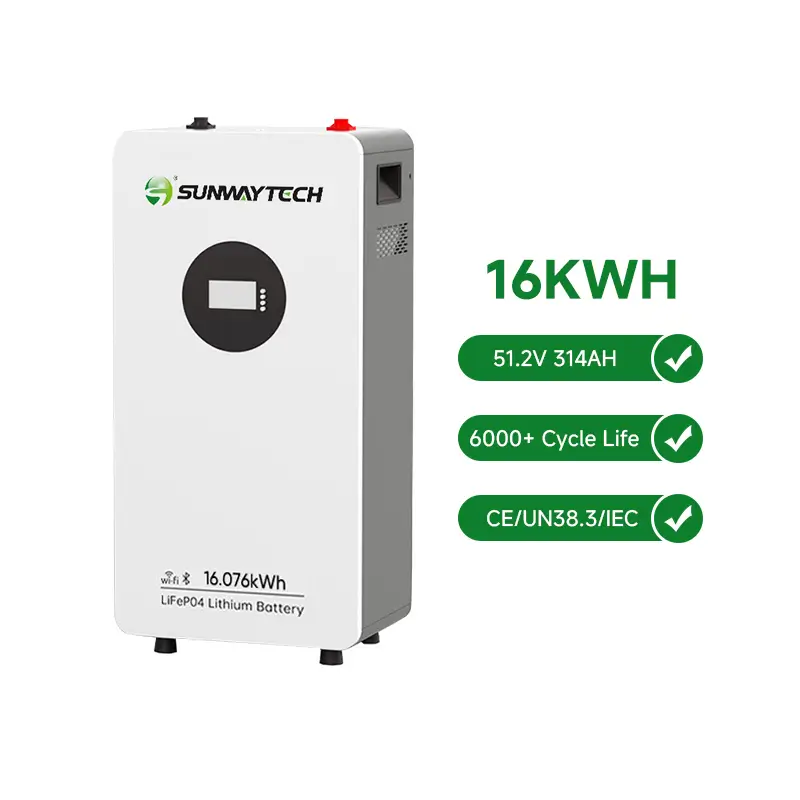
This is ideal for high-capacity residential needs. With a 314Ah capacity (16.07 kWh) and a massive 8000W discharge power, it can handle heavy appliances with ease. Its compact floor-standing design supports up to 15 units in parallel for massive scalability.
2. Sunway Wall-Mounted Lithium Battery (5kWh/10kWh)
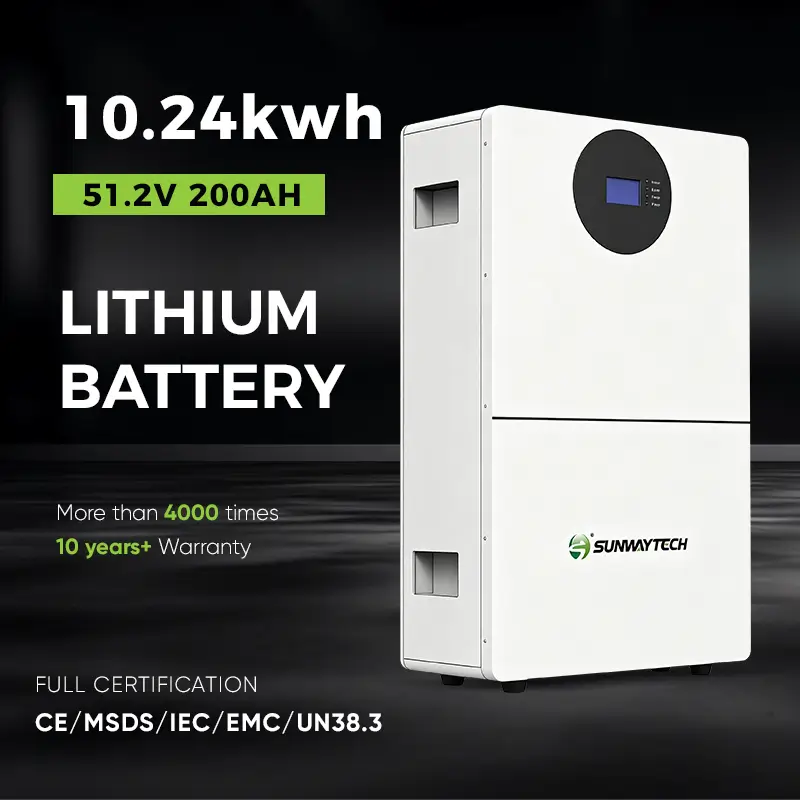
Perfect for those looking for an elegant, space-saving “PowerWall” style setup. Available in 5.22kWh and 10.44kWh models, these units feature IP65 protection, making them ideal for both indoor and outdoor installations.
3. HRH-5200 Rack-Mounted Energy Storage Battery
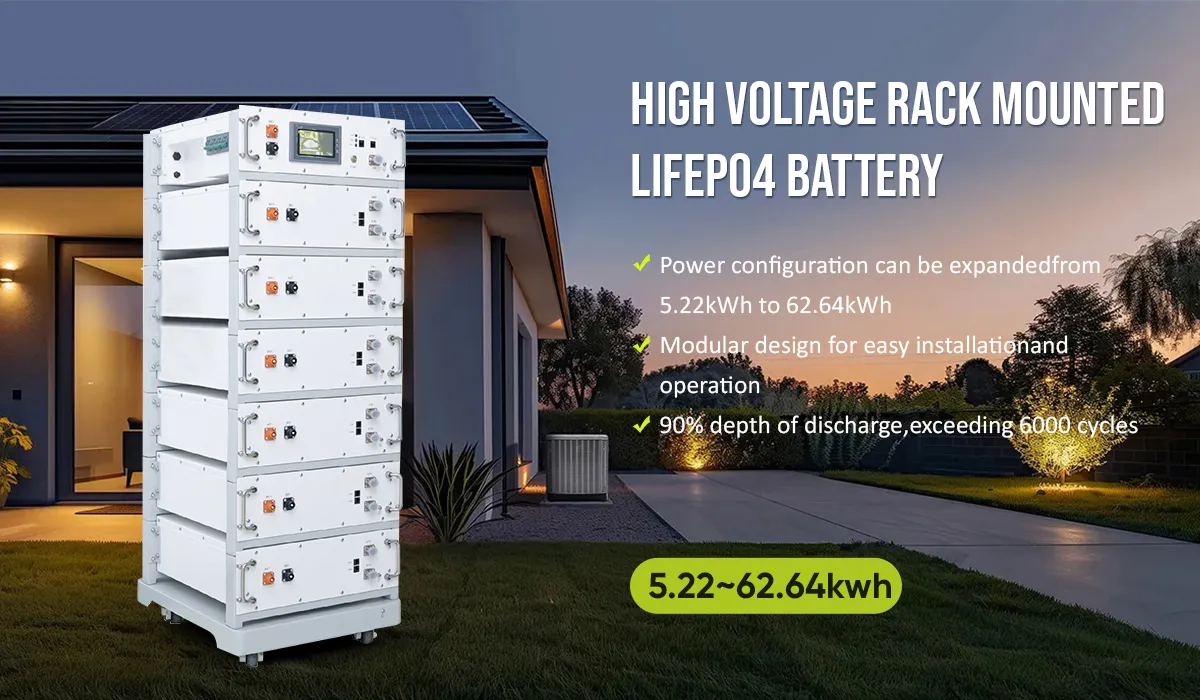
The ultimate in flexibility. Each 5.22kWh module can be stacked in a rack, allowing you to build a system from 5.22kWh up to 62.64kWh. It features an advanced internal aerosol fire suppression system for maximum safety.
Beyond the Home: Sunway C&I Solutions
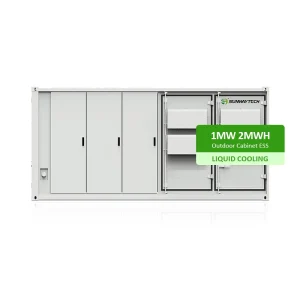
For developers and EPC contractors, Sunway’s expertise extends into Commercial & Industrial (C&I) ESS. From 100kWh outdoor cabinets with intelligent air cooling to 2MWh containerized systems with liquid cooling, we provide the infrastructure needed for factories, EV charging hubs, microgrids, and other applications.
Ready to secure your energy future?
Don’t guess your battery storage needs. Contact Sunway’s team today for a professional sizing consultation and discover how our 2026-ready storage solutions can bring you true energy peace of mind!